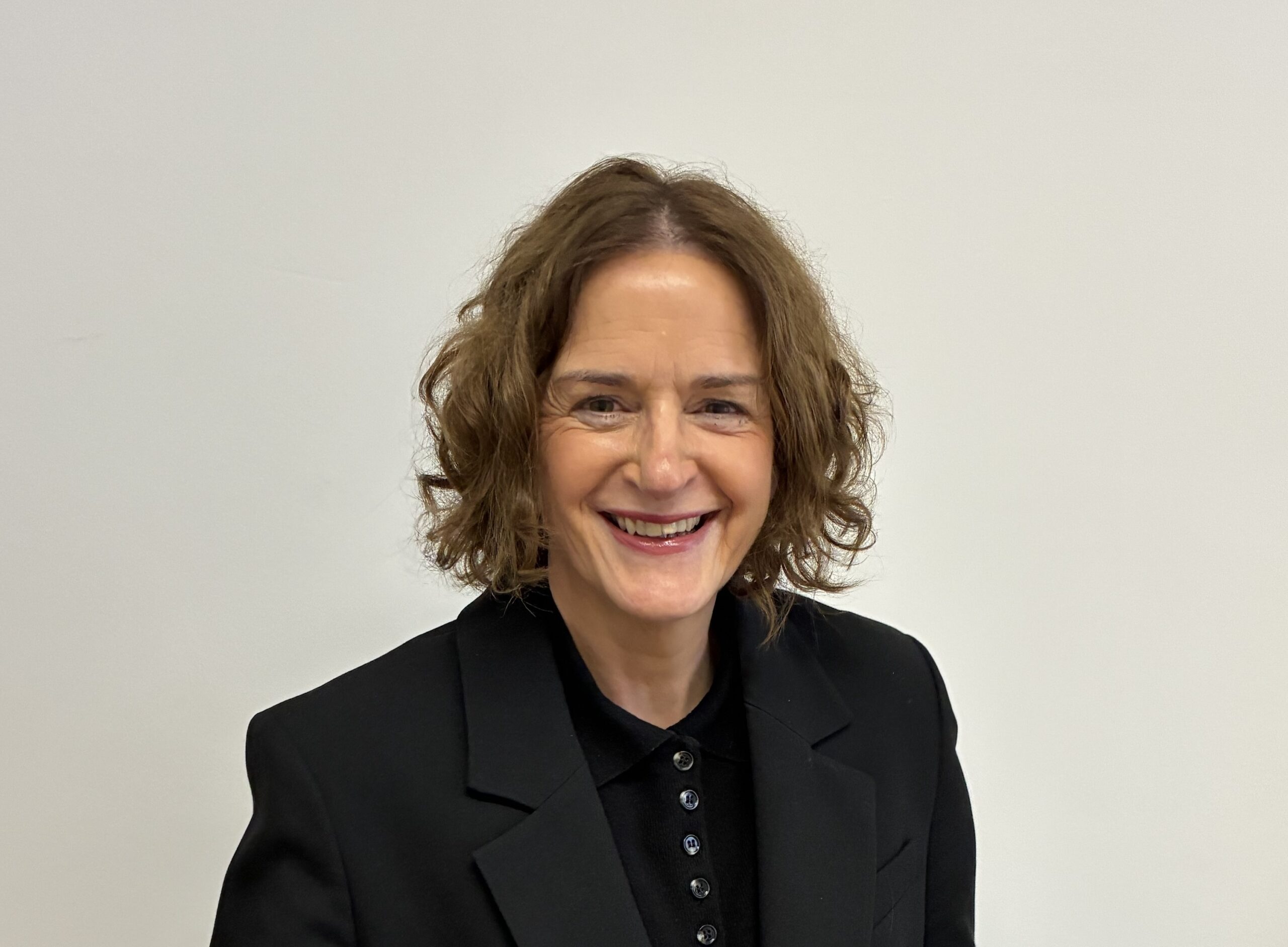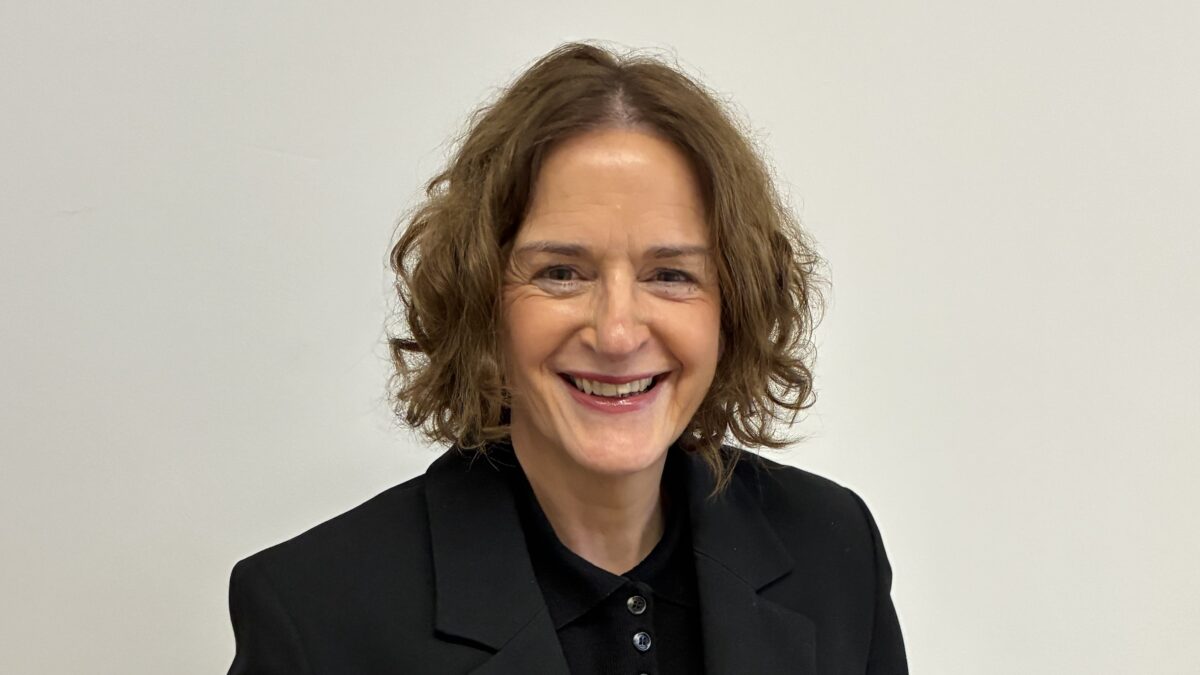

When the credits roll on Miriam Craven’s long public service career, she hopes digital and AI, if harnessed in the right way, will have played a role in transforming public services
After starting out on the Odeon Cinemas graduate scheme in Dundee, you could say Miriam Craven has always had an eye on the big picture.
Originally from County Mayo in the west of Ireland, she moved to Ayr in the late 1990s and, after rising rapidly to duty manager with Odeon, embarked on a civil service career that has now spanned two decades.
Along the way, her government roles have taken in everything from an entry-level post at the Student Awards Agency for Scotland to setting up Scotland’s first social security agency to helping resettle people fleeing war-torn Ukraine.
Now Director General Corporate at the Scottish Government, she is one of the most senior civil servants in the country, charged with steering an organisation of more than 9,000 employees through a significant, and complex, period of change.
What attracted her to government in the first place, though, was simple: “I was drawn to the public sector by the opportunity to help people,” she says.
“While we deliver for government, the real impact is on individuals – our families, neighbours and communities. That focus on practical impact has been the thread running through my career.”
Her first civil service job, assessing students’ eligibility for tuition fees and living costs, is one she describes as among her most positive experiences.
She went on to help establish Social Security Scotland, before leading the Ukraine Resettlement Programme as a director.
She later returned to Social Security Scotland as chief operating officer, before moving back into the Scottish Government as director general communities and, in March 2026, taking up her current role.
Adapting to the challenge
That means everything from digital and technology services, people and workforce, communications, corporate transformation, property and procurement, ministerial support, legal services, propriety and ethics, and even the government’s response to the Covid Inquiry.
But the forward-looking part of the job – how government adapts, especially in this fast-moving world of technology and AI – is arguably where the real challenge lies.
“A significant part of my role is helping shape how the organisation evolves to meet future challenges,” she says.
“That means leading organisational change, supporting public service reform, strengthening our use of data and technology, and making sure we have the skills, systems and culture needed to deliver in a changing environment.”
After May’s Holyrood election, John Swinney created Scotland’s first cabinet secretary for public service reform.
He appointed Ivan McKee, promising to put reform “at the heart of government”. While some may have interpreted that as cuts, the first minister’s rhetoric has been about “changing the way in which we deliver public services”.
Reform has been talked about since at least the Christie Commission in 2011, but progress has often stalled, with responsibility spread thinly across portfolios.
A dedicated cabinet secretary gives the work political clout and should, in theory, empower officials like Craven, who will be tasked with transforming services that millions of people depend on.
Craven puts digital at the core of that effort, as does the Scottish Government’s refreshed Digital Strategy, unveiled last year at Futurescot’s Digital Scotland conference.
“Across corporate government, digital is not a separate workstream sitting alongside reform – it is one of the main ways we will deliver it,” she says.
The reform strategy also aims to improve outcomes, reduce inequalities and make services sustainable for the long term.
It rests on three priorities that reinforce each other, according to Craven: prevention, joined-up services and efficiency. “Digital technology, better use of data and the responsible adoption of AI can all help us get there,” she adds.
The agent of change
If digital is the engine of reform, AI is perhaps the biggest agent of change right now – pun very much intended.
The government’s new AI strategy, Scotland’s Artificial Intelligence Strategy 2026–2031, sets out an ambition to lead on the trustworthy, ethical and inclusive use of the technology, while Serving Scotland, its five-year plan for the civil service, sets out how ministers intend to harness it.
“I think AI can make the biggest difference by helping public servants spend less time on routine administration and more time on work that needs judgement, expertise and human connection,” she says.
“It can help us analyse information more effectively, design better services, support better decision-making and make services easier for people to access.”
A decade ago, similar promises were made for ‘big data’. Could AI be what finally unlocks them? Craven thinks it can help, because it “can spot patterns, support forecasting, help us anticipate demand and give us insights that allow earlier intervention”.
Craven’s approach is grounded. “AI is only as good as the data, governance and service design behind it,” she says. “If we want to realise that potential, we first need data foundations that are high quality, interoperable and trusted.”
She is equally clear about the limits. “Technology should serve people, not the other way round,” she says. “AI is not a substitute for professional judgement, democratic accountability or the relationships at the heart of many public services. Decisions that affect people’s lives still need human responsibility. AI should support our staff, not replace the qualities that only people can bring.”
AI is not a substitute for professional judgement, democratic accountability or the relationships at the heart of many public services
That is why Scotland has said trust must come before scale, backed by ethical frameworks, guidance for public bodies and transparency measures such as the Scottish AI Register.
Nor is AI a silver bullet. “The real benefits come when AI, data, digital services and organisational reform work together,” she says. “The opportunity now is to move beyond individual digital projects towards genuinely transformed services: shared systems, common digital infrastructure, stronger digital capability and more personalised support.”
Her vision is “a public sector that works more as one system and less as a collection of separate organisations”, underpinned by shared platforms, secure sign-in and digital verification, and digital correspondence.
And she is wary of simply putting old processes online. “This is not simply about digitising the processes we already have; it is about redesigning services so they work better across organisational boundaries.”
When the credits roll
So how will anyone know it has worked? For the public, the test is practical: services that are easier to access, work more smoothly and are organised around people’s needs rather than organisational boundaries.
“People will know reform is working when they can see and feel that difference in their everyday experience,” she says, “and when it is reflected in better outcomes, particularly for those who most need support”.
Embodying that, she hopes, will be the new mygov.scot app which was launched on 28 October. It will give people a new way to receive important updates from public services and interact with them, with security and user control built in from the outset.
It is a long way from popcorn and Hollywood blockbusters, but Craven’s instinct is the same: give people an experience that works. If AI, data, digital and reform can make a real difference to people’s lives, then she will have played her part in giving Scotland’s public services the happy ending they have long deserved.
The big picture: technology that serves people, not the other way round