
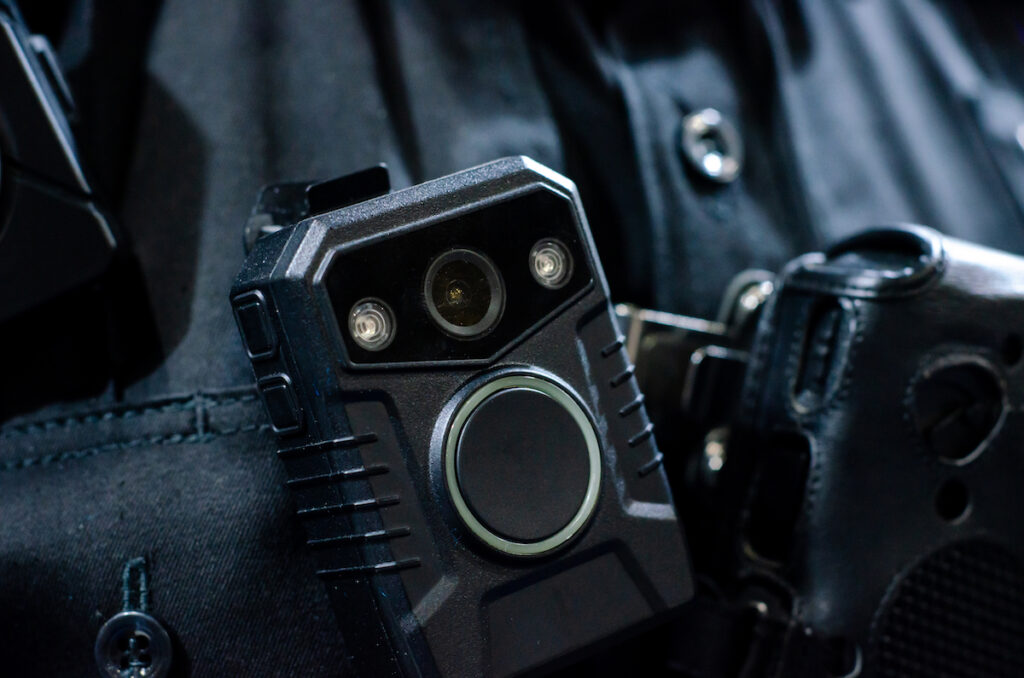
The national rollout of body-worn video cameras is now complete in Scotland – with 16,000 officers backed up by digital recordings as part of their ‘kit’.
Police Scotland announced that the programme has concluded with uniform mounted video footage providing ‘extra eyes and ears when keeping our communities safe’.
The final set of cameras and technology went live to specialist officers in Edinburgh, the Lothians and Scottish Borders, Forth Valley and Fife divisions last week.
Custody staff, roads policing, CID, public protection unit (PPU), dog handlers and the mounted unit are now using the devices across the force.
Public enquiry support assistants (PESAs), safety camera partnership officers and the firearms and explosives licensing officers (FELOs) will also deploy the cameras when interacting with the public.
Chief inspector Simon Shanks said: “The national roll out of body worn video has been a key priority and it contributes to our vision of safer communities, less crime, supported victims and a thriving workforce.
“Since its introduction the cameras and technology are helping to de-escalate incidents, improve public trust in policing and reduce complaints, as well as support officer and staff safety, and bring wider benefits to the criminal justice system.”
Since its introduction more than 1.9 million recordings have been captured and over 112,000 incidents have been created of which 53,000 (47%) containing BWV footage have been shared with prosecutors.
Shanks added: “We are starting to see that the presence of BWV is helping to reduce the number of reported officer assaults and that the footage is helping to see complaints about police resolved or even written off due to the footage that is recorded of the interaction with the public.
“Early feedback suggests that officers feel more confident performing their duties knowing digital recordings can be used as evidence if required, especially in instances of malicious complaints.”
He added: “It reassures the public too and has shown to de-escalate potential volatile situations when offenders realise they are being recorded, and the recording can be submitted as evidence during any criminal justice process.”
Since taking command in October 2023, chief constable Jo Farrell has prioritised the introduction of body worn video.
BWV is one of a number of projects and programmes that are ongoing to transform justice internally and with partners to ‘improve the victim experience, reduce time involved and promote case resolution at the earliest opportunity’.