
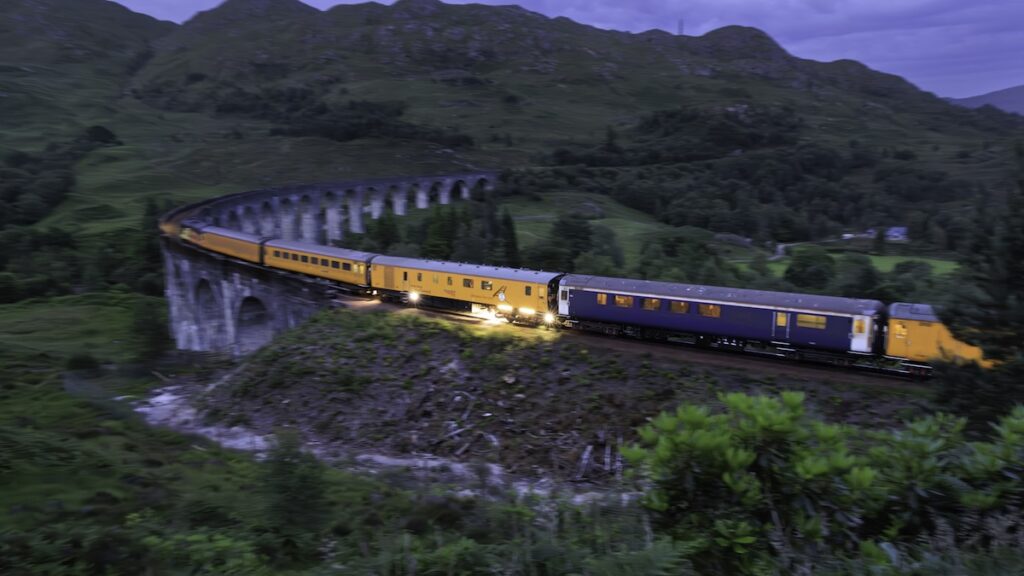
An Edinburgh-based tech firm that uses geospatial mapping to pinpoint railway defects is aiming to crack a $78 billion US track maintenance market.
Machines With Vision uses an innovative camera system fitted to the underside of inspection trains to help direct crews and machines to every fault – which ordinarily might be missed by trackside teams.
It is estimated that defect location data costs the industry $6 billion a year worldwide through repeat visits and wasted crew time.
Inaccurate data can also create a serious safety risk, unnecessarily exposing rail workers to potentially hazardous trackside environments as they search for defects that have been identified but cannot be precisely located.
Machines With Vision has developed innovative technology that uses cameras fitted to the underside of inspection trains to build a highly accurate image-based geospatial map of any railway network, enabling higher levels of safety, efficiency, and automation for railway infrastructure inspection and maintenance.
“Rail networks are complicated and dangerous environments,” said Anthony Ashbrook, Machines With Vision CEO and Co-founder.
“And the safety of workers and the general public is paramount. Ensuring that track workers get to the right place first time minimises the risk of a missed defect, keeping trains running safely and efficiently while making maintenance work itself safer.”
Machines With Vision already has won a multi-year contract with Network Rail in the UK deploy its technology following a successful two-year pilot.
The firm maps the track visually and navigates crews directly to faults with millimetre accuracy via the company’s RailLoc system and Fault Navigator mobile app.
Mark Chestney, infrastructure monitoring programme manager at Network Rail, said: “For every suspect, it would previously take on average an hour once you got on site to find it, now we’re talking five minutes. We have thousands of suspects every year, so that’s thousands of hours saved and thousands of hours of reduced exposure to slips, trips, and falls.”
He added: “With emergency speed restrictions costing thousands of pounds a minute in certain locations, deploying people to fix things rather than find things is a much more efficient way of working.”
Brian Whitney, engineering expert (track) at Network Rail, said: “Fault Navigator and RailLoc represent a significant step forward in how we identify and verify rail defects. Accurate defect location reduces unnecessary track exposure, improves the effectiveness of verification activities and helps ensure maintenance resources are targeted where they are needed most. The potential benefits for workforce safety, productivity and asset management are considerable.”