
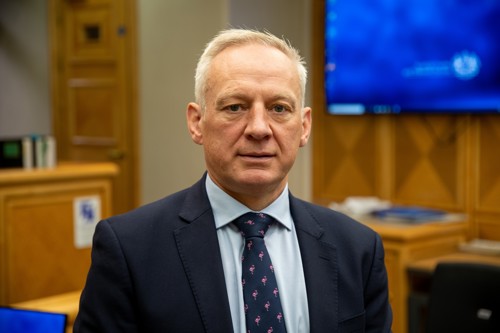
Modern digital case management is among a £62 million package of proposals put forward by the Scottish Courts and Tribunals Service to ease pressure on the justice system.
Reforming criminal case management and redesigning court processes are also at the heart of an ambitious reform programme that could drive improvements over the next five years if funding is secured.
Malcolm Graham, chief executive of SCTS, has called for action to help tackle the growing number of high court indictments.
New figures show the number of such cases has risen by three times, compared with three years ago, and the average time from a police report to high court verdict is now two years and four months.
The latest modelling projects that the average wait for the court stage of this process alone in high court cases could rise to 135 weeks by 2028-29, adding significantly to the time victims, witnesses and accused people wait for resolution.
Graham, a former senior police officer, highlighted that such delays and uncertainty can have a considerable impact on victims, witnesses, accused persons and their families, and present challenges to the collective ambition of delivering a ‘trauma-informed and victim-centred justice system’.
He said: “The criminal justice journey must be reformed from end to end so that national justice organisations can operate as a more coherent system.
“Unless we consider significant reforms in how we manage our most serious cases, the continued rise in serious and complex criminal business is likely to result in longer delays in securing justice for victims, increased pressure on prisons and additional challenges across the wider justice system.
“Simply adding more capacity or replacing individual technology systems will not provide a sustainable long-term solution, as there are implications for prosecutors, defence lawyers, victim support organisations, criminal justice social work and other justice partners.”
He added: “End-to-end reform, supported by sustained investment, is needed to deliver shorter and more reliable case journeys, improve data and remove avoidable delay and duplication.”
The Scottish Courts and Tribunals Service has developed proposals that would require an investment of around £62 million over five years to reform criminal case management, redesign court processes and introduce modern digital case management.
This would pave the way for wider reform, which is being explored by the criminal justice system through the ‘joining up justice’ programme and supporting more effective and efficient working across the criminal case journey.
Government figures show that scheduled trials are now at their lowest level of just under 13,000, compared with 43,000 in January 2022. Average waiting times have reduced from 45 weeks in 2022/23 to around 30 weeks today.
The high court, however, has experienced a sustained increase in the volume of cases, significantly above levels seen in previous years.