
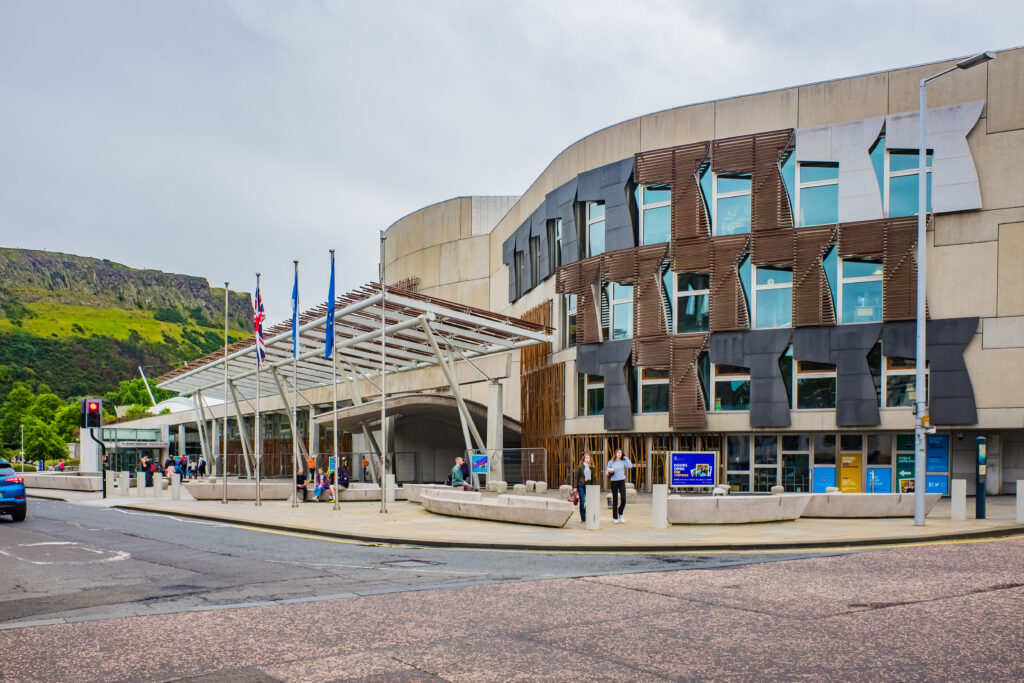
MSPs have urged the Scottish Government to keep funding its invest-to-save scheme, warning that the digital transformation needed to reform public services may not happen without upfront investment.
In its pre-budget report for 2027-28, published this week, Holyrood’s Finance and Public Administration Committee recommended that ministers consider extending the fund into the next financial year.
The 2025-26 and 2026-27 budgets each set aside around £30 million for the fund, but the committee said it was unclear whether it would continue into 2027-28. It has also asked ministers for details of the value for money and outcomes of the projects funded so far.
The committee pointed to Police Scotland as evidence of what structural reform and digital transformation can deliver. The force told MSPs the changes had produced £2.5 billion of expenditure savings, while its digital evidence-sharing programme had saved 2.2 million hours.
But Police Scotland also warned that rising and increasingly complex demand had absorbed much of the capacity created by reform, and that further digital and technology transformation now requires investment.
The report stated: “Police Scotland also highlighted that rising and increasingly complex demand had absorbed much of the capacity created through police reform, and further transformation in digitalisation and technology now requires investment.”
Sandy Begbie, chief executive of Scottish Financial Enterprise, also told MSPs that “part of the agenda needs to be invest to save”, warning that public services would hit a limit on efficiency savings and “will have to invest in technology and artificial intelligence” to change how they are delivered.
He said: “I have gone on record, including last week, to say that part of the agenda needs to be invest to save. You will hit a limit in how much you can save by simply being more effective and efficient, and you will have to invest in technology and artificial intelligence to change the way in which you deliver services to achieve a lower unit cost, to address the increasing demand in certain parts of the public sector.”
The report comes as ministers chase £1.5 billion in cumulative efficiency savings between 2026-27 and 2028-29, including £563 million this year. NHS boards are expected to deliver 3% recurring savings a year, the public sector workforce is to shrink by an average of 0.5% a year, and corporate costs are to fall by £1 billion over five years.
Giving evidence in parliament in September, deputy first minister and finance secretary Jenny Gilruth named digital delivery, alongside public body consolidation and estates rationalisation, as a potential source of savings. She described the targets as “ambitious but not unrealistic”.
However, she acknowledged that plans to cut the size of the workforce were “off course”, with headcount above the planned trajectory, and said the approach needed resetting.
The committee wants the government’s updated Fiscal Sustainability Delivery Plan, due alongside the Budget, to set out progress on efficiency savings and workforce reduction, followed by updates every six months. It has also asked ministers to define what counts as “frontline” and “back office” roles, and how they measure the impact of workforce cuts on services.
The Cabinet Secretary told MSPs that portfolios are expected to identify and manage the upfront costs of reform themselves, with invest-to-save support where appropriate.
The Scottish Government’s 2027-28 Budget is due to be published on 3 December.