
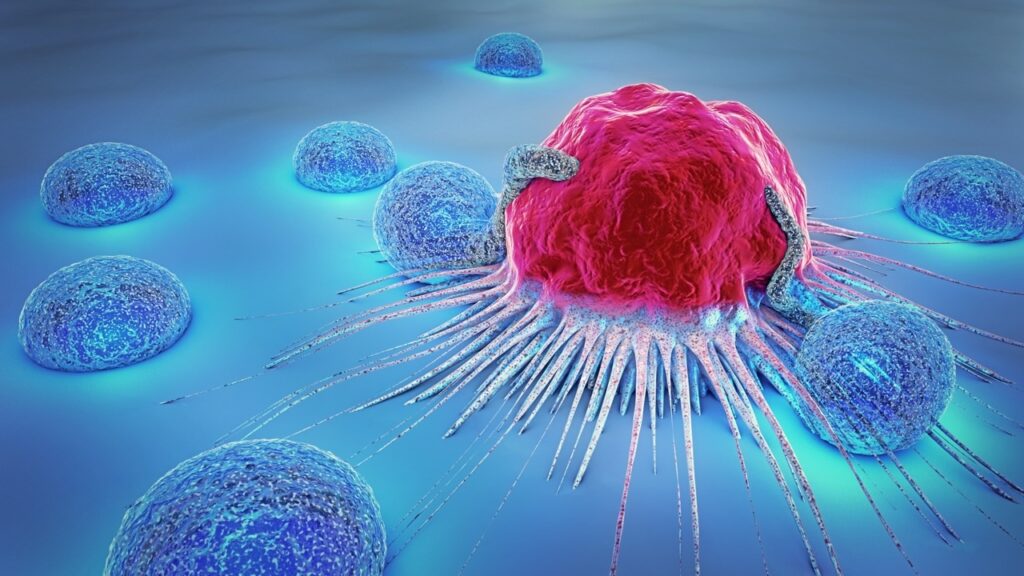
A new AI-powered imaging platform that looks deep into the configuration of cells is set to help scientists in Scotland carry out cutting-edge research into cancer and other diseases.
Heriot-Watt University has secured £449,000 from the Wolfson Foundation to bring a new system to the Edinburgh Super-Resolution Imaging Consortium (ESRIC), a national imaging facility used by researchers across Scotland.
The system is capable of identifying rare cellular events among millions of cells and examining biological processes in unprecedented detail.
Using artificial intelligence to automatically identify areas of interest and capture high volumes of data, the platform will generate large, high-quality datasets needed to better understand health, ageing and disease.
Dr Jessica Valli, ESRIC’s imaging technology manager, said: “This imaging platform will change how we work. At the moment, finding one important event among millions of cells can take hours of painstaking manual searching. This system does that in a fraction of the time, and it does it automatically, which means researchers can spend less time hunting for answers and more time understanding what they have found.
“The combination of volume, speed and precision provided by this imaging platform will give scientists new opportunities to understand how cells function in health and how those processes become disrupted in diseases such as cancer.”
ESRIC specialises in super-resolution microscopy, an advanced imaging technique that allows researchers to visualise structures and processes far smaller than can be seen with conventional light microscopes.
Unlike conventional super-resolution microscopes, which require hours of hands-on operator time, the new AI-enabled imaging platform will identify regions of interest, adjust its own settings and capture high volumes of data with minimal human input, making it possible to collect much larger, more statistically robust datasets than before.
The ability to identify and study rare cellular events is increasingly important in modern biomedical research. Many of the processes that control normal cell function occur only briefly, yet these same mechanisms can become disrupted in diseases such as cancer. Capturing these events requires researchers to analyse very large numbers of cells, making high-throughput, automated imaging a critical capability.
Professor Chris Turney, deputy principal for research and innovation at Heriot-Watt University, said: “This investment will give researchers access to one of the most advanced imaging systems available, combining artificial intelligence with world-leading microscopy to reveal biological processes in unprecedented detail. It will strengthen Scotland’s research infrastructure, accelerate discoveries in health and life sciences, and ensure ESRIC remains at the forefront of imaging innovation for researchers across the UK and beyond.”