
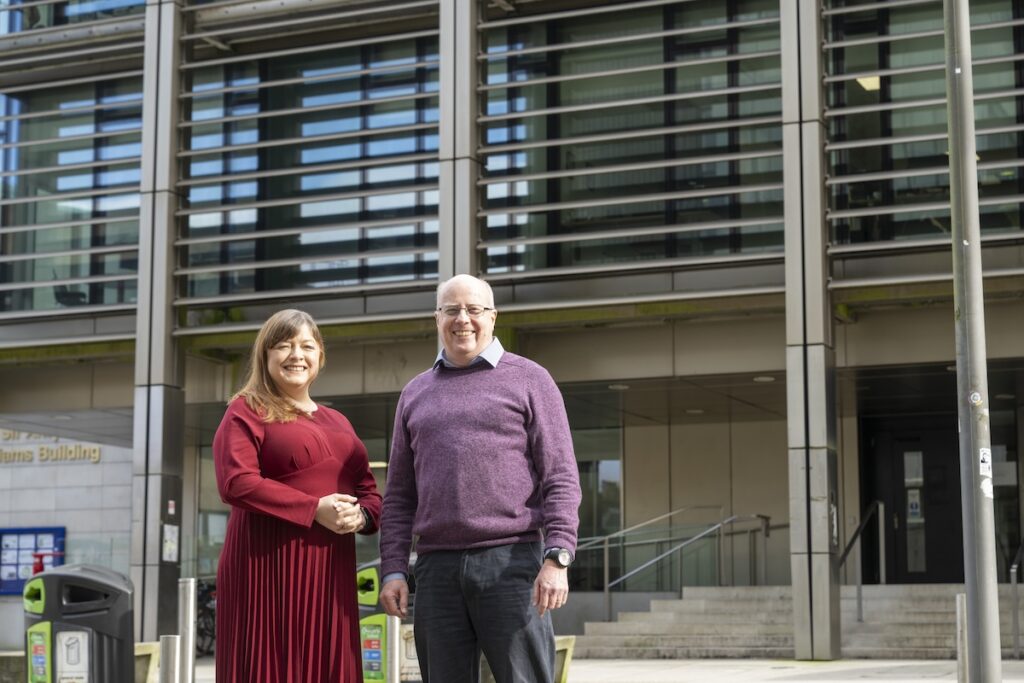
The University of Glasgow is opening a new computing science innovation lab to help foster closer collaboration between academia and industry.
The Glasgow Computing Science Innovation Lab (GLACSIL) is being officially launched today (Friday 22ndMarch) with an event at the University’s Clarice Pears Building.
The event brings together researchers from the University’s School of Computing Science with representatives from some of the six companies which have already formed close collaborative links with researchers from the School through jointly funded research.
Those companies include Bell Nokia Labs, BT Research, Thales, Moodagent, International Data Flows, and DotPhoton.
GLACSIL’s aim is to build on productive partnerships already established with companies, from SMEs to multinationals across a wide range of sectors.
Researchers from the university and key staff from partner organisations will work more closely to spark new collaborations, benefit from joint funding opportunities, and develop new commercial products.
A key initial activity for GLACSIL will be sharing the innovative research culture of the School of Computing Science with member companies.
Members will be able to participate in research seminars, workshops, networking events and other activities to debate, discuss, and solve key research questions for academia and industry.
Jill Dykes, of the University of Glasgow, is GLACSIL’s co-director.
She said: “The University of Glasgow has always been at the cutting edge of computing science. We were the first Scottish university to establish a computing science department, and the first in Scotland to install an electronic computer back in 1957. We have been working closely with partners in industry to help realise the real-world potential of computing science research ever since, while generating world-class socioeconomic impact.
“Universities are unique spaces where researchers have the freedom to explore ideas that they find interesting and push forward new technological developments. GLACSIL partners will have the inside track on learning about those breakthroughs. Glasgow’s School of Computing Science innovates across a wide range of domains: from AI, computer vision, social robotics, and healthcare technologies, to algorithm development, cyber-security, systems and communications, and programming languages. Within GLACSIL, we’ll work with our partners across those areas in response to real-world problems, business needs, and commercial applications.
“Companies can benefit from partnering with universities to tap into our expertise, augment their own research and development work, and fund studentships which can create graduates custom-tailored for their needs. GLACSIL will work to bring all that activity under a single umbrella for partners we’ve already built quality relationships with.”