
Ministers are being urged to consider introducing ‘primary legislation’ governing the use of controversial live facial recognition (LFR) technology in Scotland.
Dr Brian Plastow, the Scottish Biometrics Commissioner, has written to the new justice secretary Neil Gray asking him to keep pace with the UK Government, which committed to a legal framework for the tech in the King’s Speech last month.
Dr Plastow, whose office regulates the use of biometrics technologies for policing in Scotland, said it would be “inconceivable” that officers north of the Border would not have equitable access to the technology.
He argued the technology – underpinned by proper legal safeguards – could help combat serious and organised crime, counter-terrorism, county-lines drug dealers, and as part of a ‘strategic policing response to address the national emergency of male violence towards women and girls’.
He writes: “In relation this last aspect, it is worthy of note that LFR has had considerable success in England and Wales in identifying Registered Sex Offenders (RSO’s) either unlawfully at large and wanted on warrant or alternatively acting in breach of a sexual harm prevention order (SHPO) and in the Metropolitan Police area 10% of arrests through LFR deployments relate to sex offenders posing a danger to the local community.”
The King’s Speech on May 13 contained a commitment to ‘establish a new legal framework [for England and Wales] to underpin law enforcement use of facial recognition and similar technologies, making it clear when use of these technologies can be justified…’
Civil liberties campaigners, such as Big Brother Watch, have lobbied government to introduce a proper legal underpinning regulating the use of AI-enabled camera recognition. At the SNP party conference in October last year, a similar motion was passed calling for primary legislation for the technology.
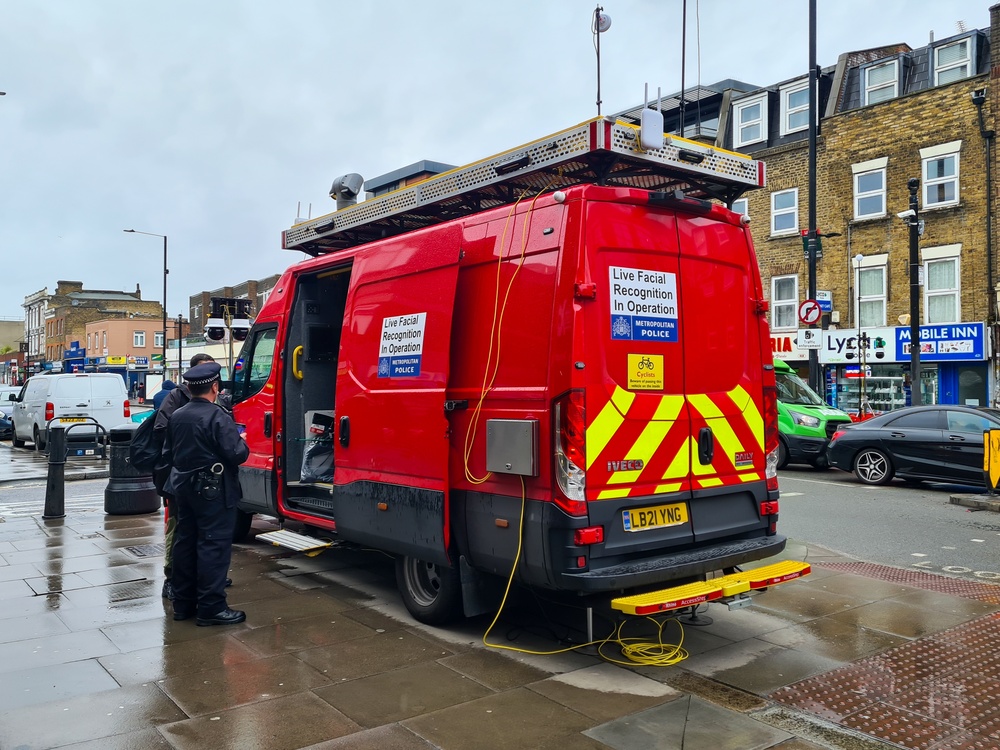
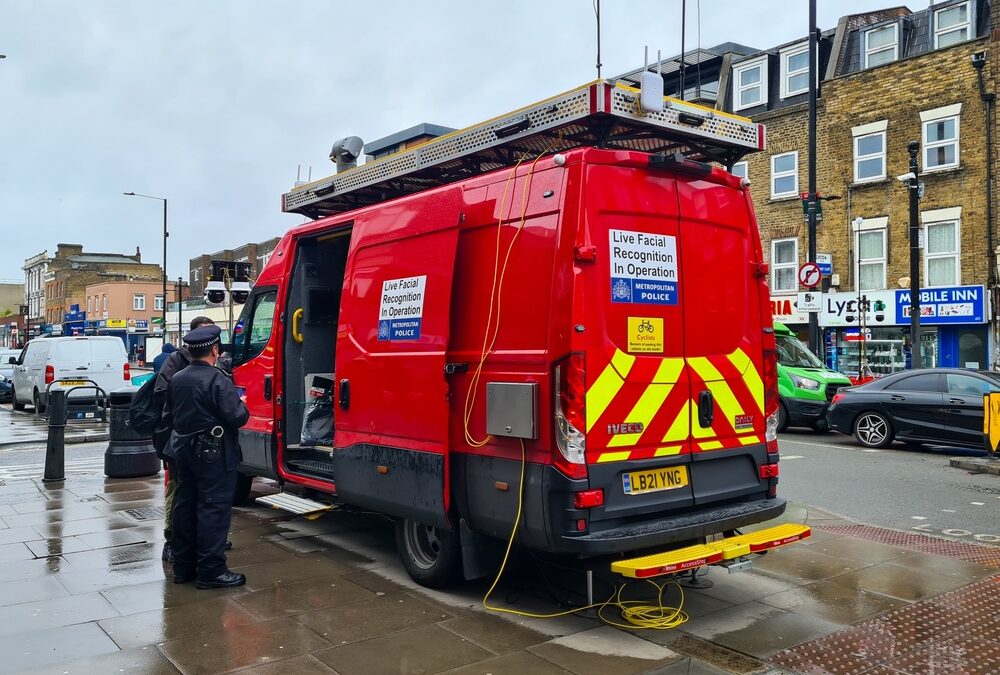
At the moment, live facial recognition technology, which is permitted under the Scottish Biometrics Code of Practice, has not been used in operational policing in Scotland. It is in use in England and Wales, most notably by the Metropolitan Police in London, and by South Wales Police.
However, Dr Plastow said that the technology is ‘accelerating at scale’ in England and Wales, following a ‘massive expansion’ of Home Office funding. An additional £140 million was allocated to new policing technologies in January by Home Secretary Shabana Mahmood. Under those plans, the number of live facial recognition technology police vans will be upped from 10 to 50, overseen by a national centre on artificial intelligence. Dr Plastow said, though, that the UK Government had ‘put the cart before the horse’ by already permitting live facial recognition technology without legislation governing its use.
Deploying cameras capable of scanning faces in real time, police forces across England and Wales use live facial recognition technology to identify individuals on watchlists of suspects wanted by police or the courts, locate missing children and vulnerable adults, and disrupt criminal activity in ‘targeted areas’. As of March 2026, 13 of the 43 police forces in England and Wales were using LFR, with a national rollout planned.
The technology has demonstrated strong operational results, particularly in London. In 2024-25, 2,067 of 2,077 potential match alerts by the Metropolitan Police LFR were ‘true alerts’, leading to 962 arrests, according to the force. The rate of false positives was 0.0003%, the data showed.
However, there are challenges when it comes to bias and mis-identification of suspects. Crowded places, poor-quality images or partially concealed faces have impacted on accuracy levels. In Scotland, Dr Plastow has already highlighted quality issues when it comes to images held by Police Scotland, which could be used potentially to create watchlists for live facial recognition deployment. He has said a “sizeable proportion” of custody images taken between 2019 and 2024 are of such low quality they are unsuitable for police use in relation to facial searching technology.
Biases have also been found in algorithms. Tests on a commonly used retrospective facial recognition algorithm in 2025 showed a higher rate of false positives for faces of Black and Asian people, for example, with the technology implicated in the wrongful arrest of an Asian man earlier this year in Southampton. Tests last year also found that black women were the subject of the highest percentage (9.9%) of false positive identifications at a 0.8 threshold.
The Scottish Government confirmed there is no change to the existing stance on live facial recognition technology.
A Scottish Government spokesperson said: “The lawful, effective and proportionate use of any technology with facial recognition capability is an operational matter for Police Scotland, who must abide by data protection laws, the European Convention on Human Rights and the Scottish Biometrics Commissioner’s statutory code of practice.
“As Police Scotland and the Scottish Police Authority have made clear, their considerations around the potential use of live facial recognition technology are ongoing.”