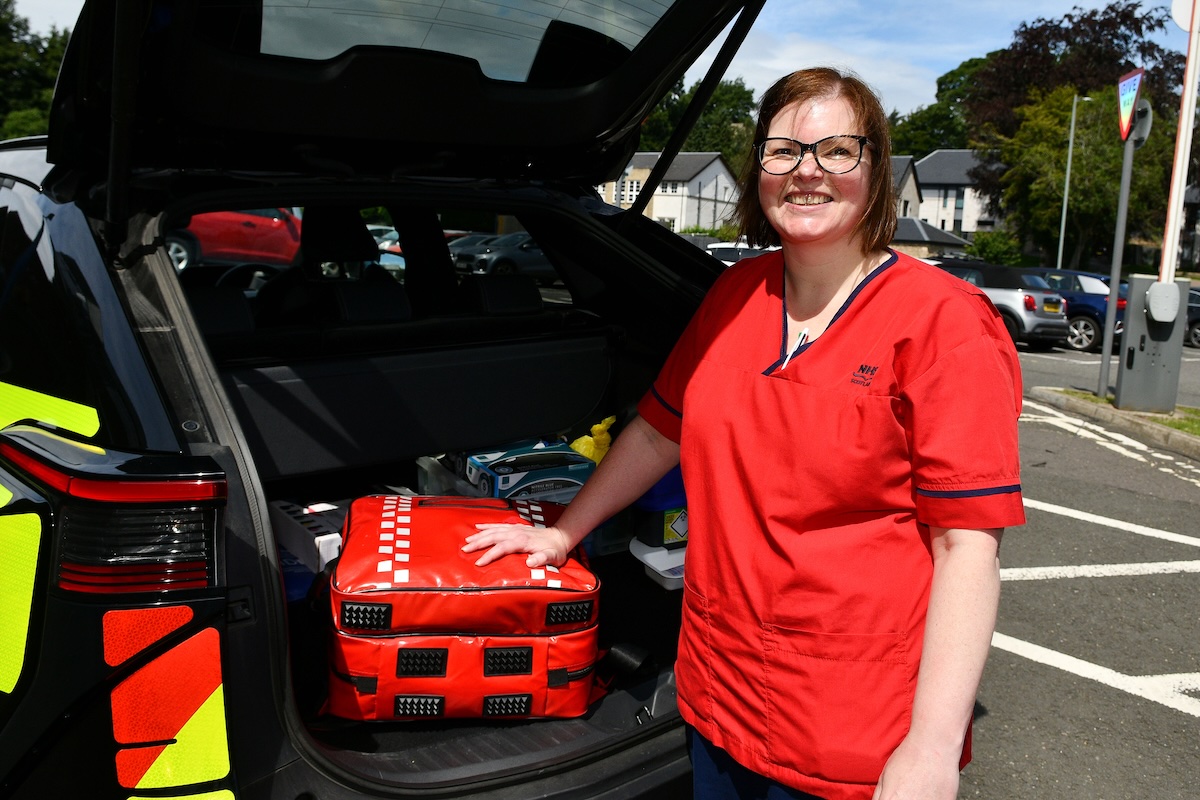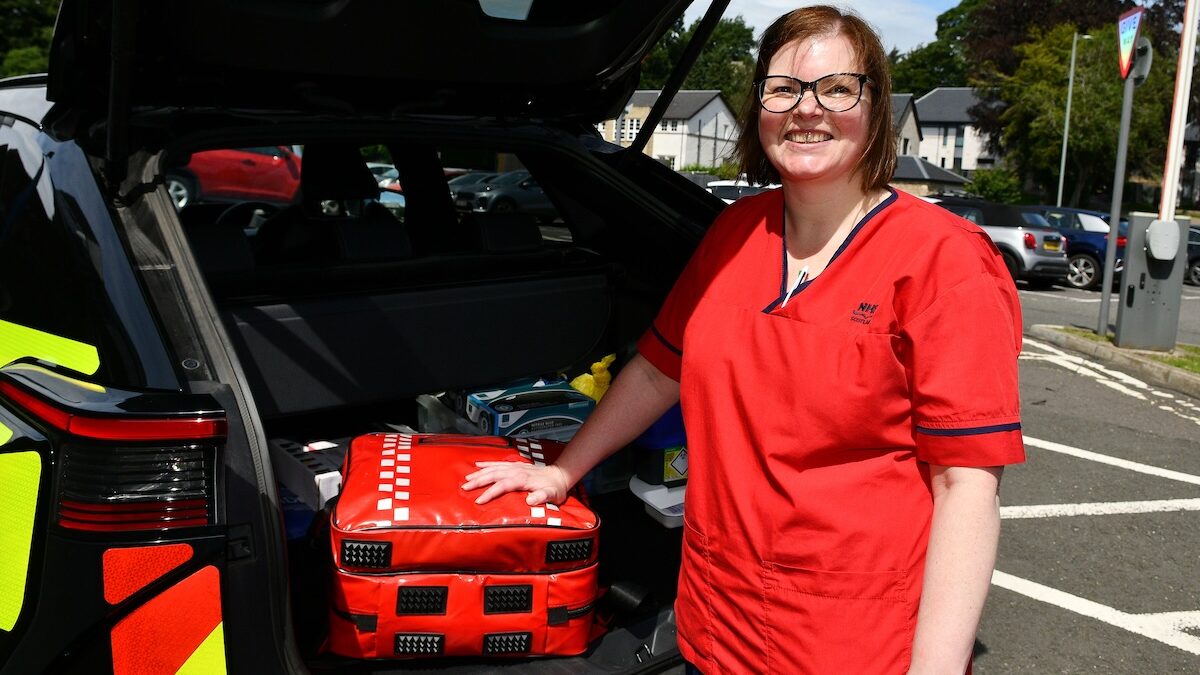

One of Scotland’s health boards has announced a major expansion of ‘virtual ward’ capabilities in a bid to treat more patients at home.
NHS Forth Valley is rolling out more ‘hospital at home’ services, enabling more local people to receive safe, specialist, hospital-level care in their own homes.
The expansion will help reduce pressure on hospital services, free up capacity across the healthcare system and ensure more local people can access hospital-level care in familiar surroundings whenever it is safe and appropriate to do so.
Under the plans, a new 10-bed respiratory virtual ward to support more patients with acute respiratory conditions at home.
These include patients experiencing complications or flare-ups for a wide range of respiratory conditions including chronic obstructive pulmonary sisease (COPD), pneumonia, flu, respiratory syncytial virus (RSV) and acute asthma.
The proposals include the creation of five new OPAT (outpatient parenteral antimicrobial therapy) hospital at home beds to delivers intravenous or complex antimicrobial treatments to patients in the comfort of their homes or via outpatient clinics.
For older people, hospital at home services will also increase from 25 to 30 beds, in line with the Scottish Government’s aim to increase virtual ward capacity across Scotland.
Dr Sarah Henderson, consultant geriatrician with NHS Forth Valley’s Hospital at Home Service, said: “Our local hospital at home team do an amazing job to help ensure that patients, who in the past would have to be come into hospital, are able to remain in their own homes and access the specialist clinical care and support they require.
“This expansion will ensure more patients across Forth Valley are able to remain at home while still receiving the specialist clinical care and treatment they require.”
She added:”We know that many people recover better at home and the feedback we have received from previous patients and families has been overwhelmingly positive as they really appreciate being able to stay in familiar surroundings at home, close to their family, friends and pets.”
“Having extra capacity in the hospital at home service will not only avoid hospital admissions but also support discharge arrangements for patients who require follow up clinical care at home.”
The service provides short-term, targeted acute clinical care for people who would otherwise require hospital admission or who can be discharged earlier from hospital with ongoing specialist support delivered at home. Patients remain under the care of clinical teams and have access to monitoring, diagnostics, treatment and clinical review tailored to their individual needs.
Health board announces expansion of 'virtual ward' capabilities in bid to treat more patients at home