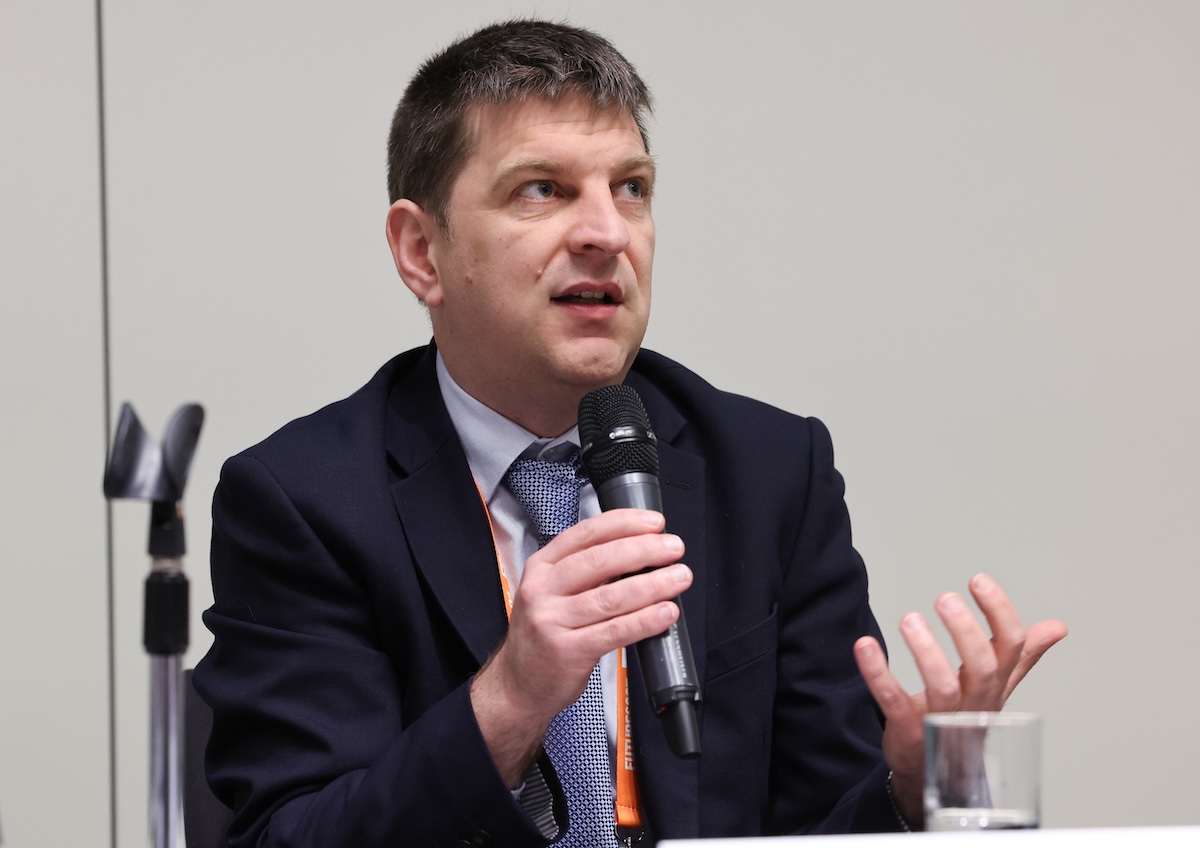

Scotland’s digital ambitions have a new figurehead. Jonathan Cameron, deputy director of digital health and care at the Scottish Government, is taking the reins as director of digital, replacing Geoff Huggins.
Huggins has led the Digital Directorate since July 2021. His remit has covered common platforms, connectivity, the Scottish Digital Academy, Connecting Scotland and CivTech.
He came to the role from NHS Education for Scotland, where he set up NES Digital Service in 2018 to build a national digital platform for health and care. Before that he was the Scottish Government’s director for health and social care integration, and also its director for digital health and social care.
Cameron also comes to the post from health. He joined the Scottish Government in November 2019 after a career in data and IT roles across the public and private sectors, and has had overall responsibility for the Digital Health and Care Strategy and its major delivery programmes.
His eHealth track record includes delivering the Emergency Care Summary and Key Information Summary systems. He was also a challenge sponsor for CivTech’s first three years and sits on the board of the Digital Health & Care Innovation Centre.
His promotion comes at a pivotal moment. When the refreshed Digital Strategy for Scotland was unveiled at Digital Scotland last November, the first minister set out an ambition for Scotland to become a ‘digital-first nation’.
Twelve months on, the conference returns to the Edinburgh International Conference Centre on November 24 with the inevitable follow-up question for the expected 1,200 delegates: what has actually been delivered?
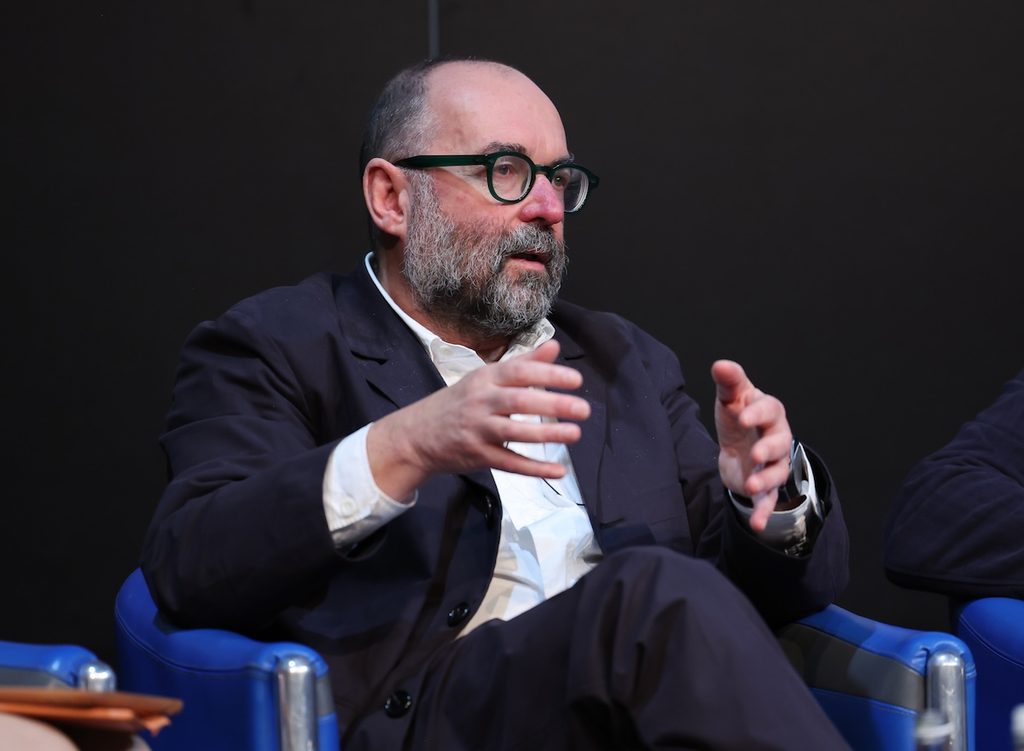
That question will frame the morning keynote, Scotland’s Digital Strategy – Year Two: Delivery and Resilience, where Cameron hopes to make his debut contribution at the national public sector digital conference.
He brings deep experience of digital health and care, where the strategy’s ambitions – from the MyCare.scot service to AI scribes – are being tested most visibly.
Joined by Martyn Wallace, chief digital officer at the Digital Office for Scottish Local Government, the session will give an update on common platforms, AI adoption, data and local government digital services, including what has proved harder than expected, and what year three looks like.
With the strategy co-designed and co-delivered by national and local government, the session will make the case for shared digital components serving central and local services alike.
Emily Middleton, interim director general for digital transformation at the UK Government Digital Service, offers a view from Whitehall.
There is tangible progress to point to. Edinburgh govtech platform ePass, born out of a CivTech challenge, is live as shared infrastructure for licensing, registration and permitting, having begun with the national register of tobacco and vape retailers.
Its founder and chief executive, James Buchan, chairs the afternoon session Building the Plumbing, Not the Product, sponsored by ePass, arguing that the biggest barrier to AI in public services is not the AI itself, but the fragmented systems beneath it.
He is joined by Mark Grey, who leads the Scottish Government’s component-based services work; Police Scotland’s T/Superintendent Caine McIntyre, who helped move firearms licensing to a national operating model; Dundee City Council’s Anthony Carr; and Miranda Savage, who is overhauling licensing UK-wide at the Department for Business and Trade.
Delegates will also be keen to hear about the new Scottish Government App. Built largely around a ‘digital mailbox’ from Danish technology company Netcompany, which developed Denmark’s national Digital Post service, the app will provide a single, secure place for citizens to receive official correspondence and access personalised services through ScotAccount.
Launched in 2023, ScotAccount lets people use one secure login and verify their identity once to access public services. Its current reach is limited to licences and registrations, bus pass eligibility and the MyCare.scot health and care service, but the app could significantly broaden its use.
Weather and travel alerts, then digital proof of age, are expected, while the mailbox made its debut in June through the MyCare portal.
Isaac Smith, deputy director for digital components and infrastructure, whose team builds the components behind the app, will explore that national infrastructure in the afternoon stream The Backbone of Secure, Trusted Citizen Systems, sponsored by AWS, alongside PSD Scotland’s Christopher Wroath and AWS’s Kira Levy.
Reform on the agenda
Public service reform will dominate much of the discussion. The day opens with Hannah Mary Goodlad MSP, minister for public finance, in conversation on Reforming Scotland’s Public Services. Elected for Shetland in May after an energy career at Equinor, she makes one of her first major appearances before a large civil service audience.
Her remarks come weeks after the Scottish Government’s Serving Scotland plan set out a smaller civil service with AI and automation at its heart – from rolling out Copilot and Power Platform across government, to developing AI agents and a new AI and Automation Centre of Excellence.
Resilience is another key topic of the day. As attackers use AI to automate reconnaissance, craft convincing phishing and probe for weaknesses at scale, the networks behind water, health and other essential services face a fast-evolving threat.
In the morning, Chris Toop, director of digital and innovation at Scottish Water, and Ishbell MacPhail, head of Scotland at headline sponsor BT Business, will feature in the Resilience Runs Deep panel.
Under a single strategic partnership announced in July – part of a wider £130m Scottish Water investment in networks and security – BT is taking end-to-end responsibility for the utility’s IT and operational technology estate, including around 7,000 network connections.
BT is also custodian of the Scottish Wide Area Network (SWAN), the shared network connecting more than 6,000 public sector sites – from schools and GP surgeries to hospitals and council offices.
The afternoon cyber stream, sponsored by SCC and Zscaler, is chaired by Maggie Titmuss of the National Cyber Resilience Advisory Board and brings in Alan Gray, the Scottish Government’s head of national cyber security and resilience, and Nils Krichel of NHS Scotland’s Cyber Centre of Excellence on supply chains, AI-enabled threats and zero trust.
AI: from pilots to outcomes
The afternoon digs into the most pressing tech issues in public services – none more so than AI.
Across Scotland, use cases are multiplying. AI scribes are already supporting staff in NHS, social work and social care settings, prompting interim national guidance in August.
The Scottish Government’s new AI Strategy highlights tools such as SPARRA, which analyses millions of health records to identify people most at risk of emergency admission. Police Scotland is preparing to pilot object-recognition CCTV search in Aberdeen – with facial recognition disabled – to help find missing and vulnerable people faster, while Social Security Scotland has tested AI translation of client letters.
The Scottish Government was also the first in the UK to use Consult, an AI tool built by the UK Government’s Incubator for AI, on a live public consultation: it sifted more than 2,000 responses on non-surgical cosmetic procedures such as lip fillers, producing themes closely matching those of human analysts.
AI and the ‘Personal Touch’, sponsored by Scott Logic and chaired by COSLA’s chief digital officer Dougie Shirlaw, promises to move beyond use cases to measurable outcomes, with NHS 24 chief information officer Ann-Marie Gallacher and the Scottish Government’s chief data officer Dr Tom Wilkinson.
Home-grown innovation will also be on show. The three finalists in the 2026 Futurescot AI Challenge – Qualifications Scotland, Fife Council and the Scottish Courts & Tribunals Service – will showcase working proofs of concept developed over the past three months with Edinburgh tech consultancy Storm ID. Qualifications Scotland is using AI to analyse the 10,000-plus reports markers submit each year, Fife Council is exploring safe automation of school enrolment checks, and the courts service is using large language models to assess legacy applications, potentially cutting assessment effort by 60 to 80 per cent.
Skills for reform
We are also pleased to introduce a new session this year, Building Scotland’s Digital Workforce, sponsored by IBM, recognising that skills and capability will be central to the reform agenda.
Chaired by Lee Dunn, head of the Scottish Government’s Digital Academy, it will tackle recruitment, retention, digital skills pipelines and what the digital, data and technology profession means in practice.
Speakers include Yor Turner, the Scottish Government’s chief operating officer for digital; Verity Hislop of the Digital Office for Scottish Local Government, who leads work on data literacy and responsible AI adoption across Scotland’s 32 councils; and Keith Dargie, chief digital officer at the Crown Office and Procurator Fiscal Service, on closing the gap between AI ambition and operational reality.
On the exhibition floor
Beyond the main sessions, the exhibition zone gives delegates the chance to meet the companies and partners shaping Scotland’s digital public services.
Among them is DataVita, which is spearheading the next big development in Scotland’s AI infrastructure. Backed by a £300m debt facility, it is expanding its DV1 site and building a new facility, DV3, in North Lanarkshire – Scotland’s first AI Growth Zone – and has lodged plans for a further data centre, DV4, on the same Chapelhall campus.
A Danish delegation, hosted by the Danish Embassy, will share lessons from Denmark’s health and life sciences ecosystem, from secure health data to AI-supported diagnosis.
Digital Scotland 2026 takes place on Tuesday, November 24 at the EICC, Edinburgh.
Exclusive: Cameron takes control at critical point for digital drive