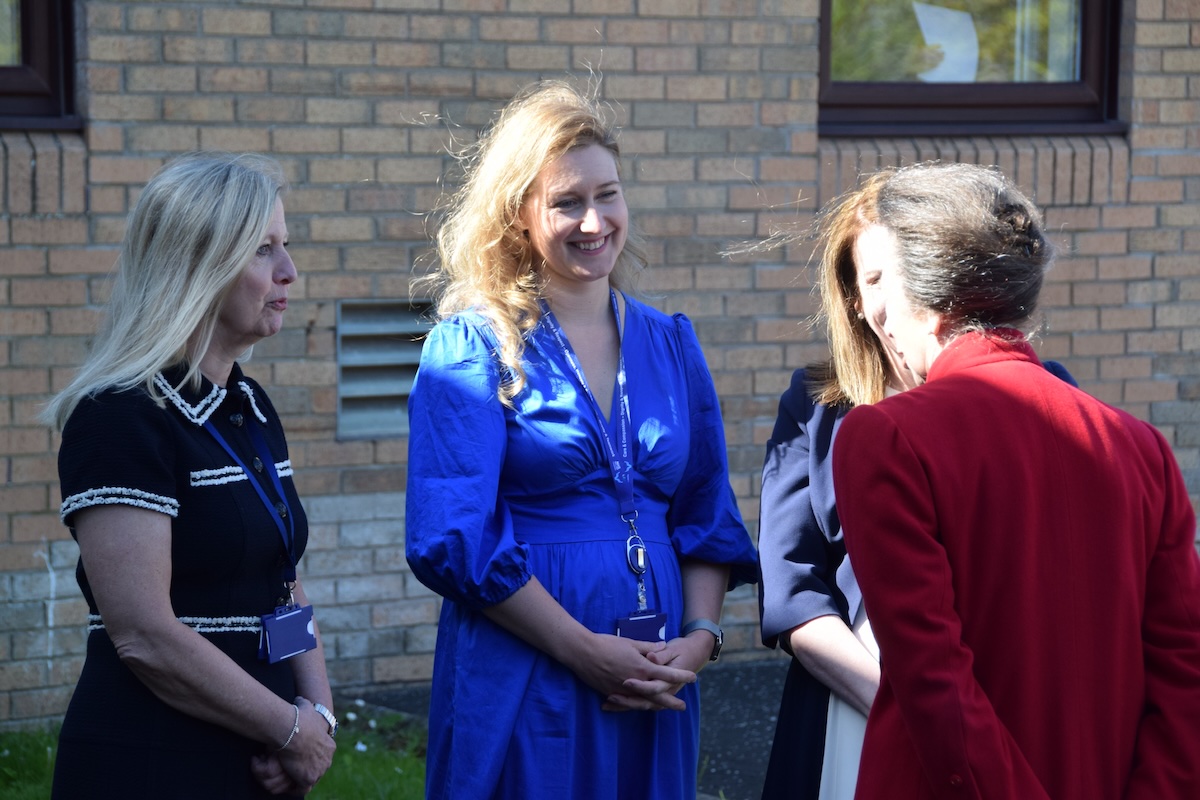

Princess Anne has visited a cutting-edge NHS urgent care facility outside Glasgow to see how teams of clinicians are working to reduce pressure on hospital services.
The Princess Royal visited Kirklands Hospital in Bothwell, Lanarkshire, to see how the Flow Navigation Centre Plus (FNC Plus) helps better manage demand and save patients from unnecessary admissions.
FNC Plus operates as a 24/7 control hub, bringing together nurses, paramedics, GPs, consultants, Allied Health Professionals and support staff to manage demand in real-time and make rapid, informed decisions about patient care.
Princess Anne toured the facility with Vice Lord Lieutenant Gavin Whitefield CBE DL and Depute Provost of South Lanarkshire Bert Thomson as part of the official party.
Handling around 7,000 calls each month, the service supports hundreds of patients every week to avoid unnecessary hospital admission, connecting them instead to services such as virtual wards, Hospital at Home and community teams.
During the visit, The Princess Royal was shown how teams work alongside partners from Primary Care, the Scottish Ambulance Service and NHS 24 to assess demand and coordinate care across services.
She recognised the strength of the multidisciplinary approach, noting the emphasis on coordination, clinical judgement and supporting patients in the most appropriate setting.
Louise Long, chief executive of NHS Lanarkshire, said: “We were pleased to welcome Her Royal Highness and to share the work of our teams. Flow Navigation Centre Plus reflects a clear focus on delivering care that is both clinically effective and centred on people’s needs. It is a privilege to lead an organisation where staff continue to develop and improve how care is delivered.”
Claire Ritchie, interim director of Interface Services, said: “This was an opportunity to demonstrate how the approach works in practice for our patients in our communities. Our teams are working across the health and care system every day – combining clinical expertise with real-time decision-making to support patients as they navigate what are often the most vulnerable moments of their lives.”