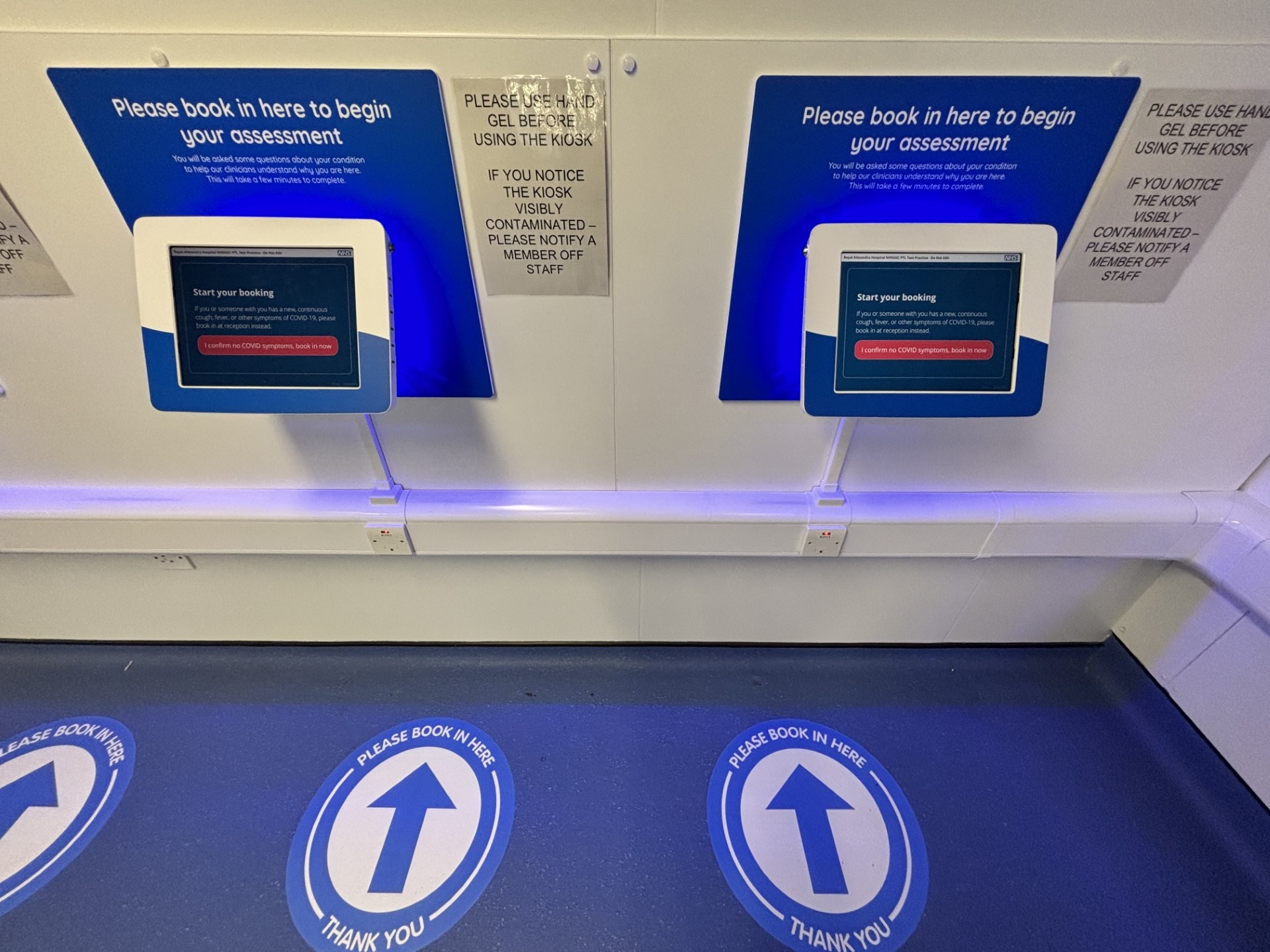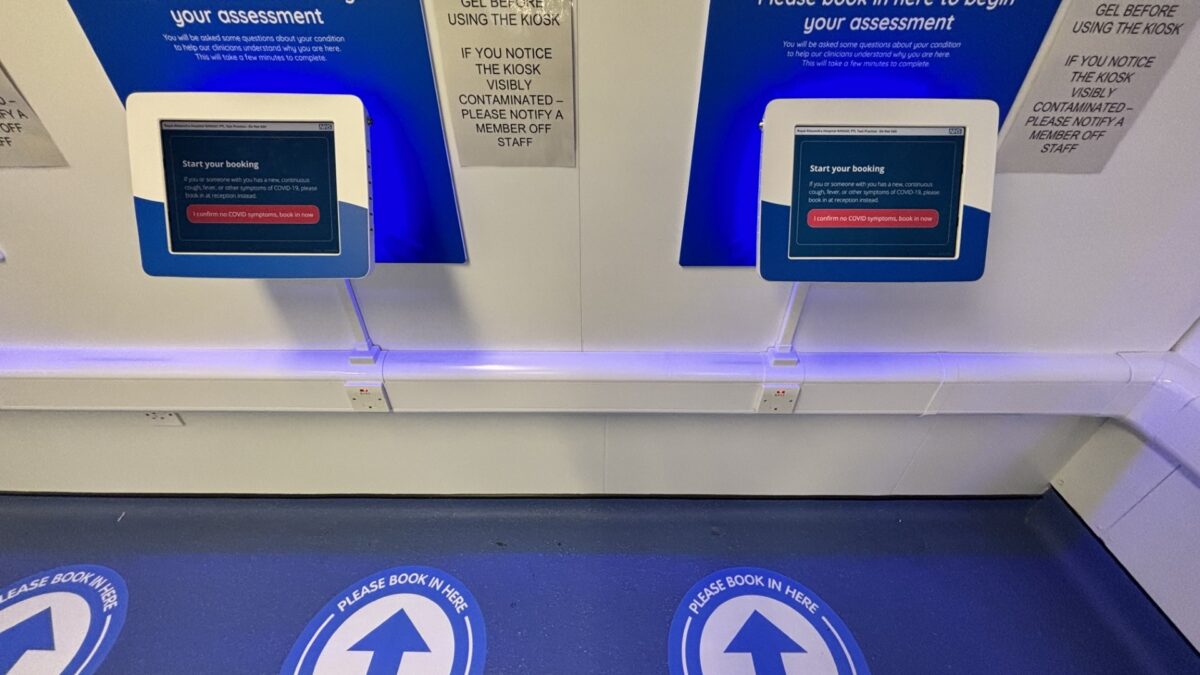

New digital triage ‘kiosks’ are being installed in Glasgow hospitals to support ‘faster, safer patient care’ in busy accident and emergency departments.
The eTriage system has gone live at the Queen Elizabeth University Hospital, with the Royal Alexandra Hospital, Glasgow Royal Infirmary, and Inverclyde Royal Hospital to follow.
Digital triage forms a part of NHS Greater Glasgow and Clyde’s ‘virtual hospital’ programme, which is designed to improve patient flow, reduce delays and ensure people receive care in the right place.
On arrival at A&E, patients will check-in using a digital kiosk before being guided through a short set of clinically‑designed questions about their symptoms using a touchscreen.
Their responses will be sent instantly to the clinical team, giving staff a fuller picture of each patient’s condition within minutes of arrival, informing decision-making for priority cases.
Lorraine Cowie, director of Interface for NHSGGC, said: “Introducing digital triage across our A&E departments is an important step in improving how quickly and safely we assess patients. By giving clinicians immediate access to high quality information, we can prioritise those in most urgent need and reduce delays.
“As part of our wider virtual hospital programme, this approach will also help us guide some patients to more appropriate services, including offering advice, virtual support or booked appointments elsewhere when it is safe to do so. This means A&E can focus on the most serious conditions, while other patients are seen more quickly in the right setting.”
She added: “Patient safety will always remain our priority, and anyone who needs emergency care will continue to receive it.”
It is hoped the system will also help redirect people who come unnecessarily to A&E to more appropriate services.
Check-in information may be shared with other clinical teams, including the virtual hospital, in future. This could mean some patients get help faster – such as advice, a virtual appointment, or a referral – without waiting in A&E.
Digital triage can also help protect patient confidentiality, through not having to share sensitive information in busy departments. However, the health board insists it will not force patients to use the kiosks, particularly those who prefer to speak to staff face-to-face, and for those who find it challenging to use such technology for a variety of reasons.
The system, which will not replace staff roles, also helps clinicians to monitor the demands in A&E.