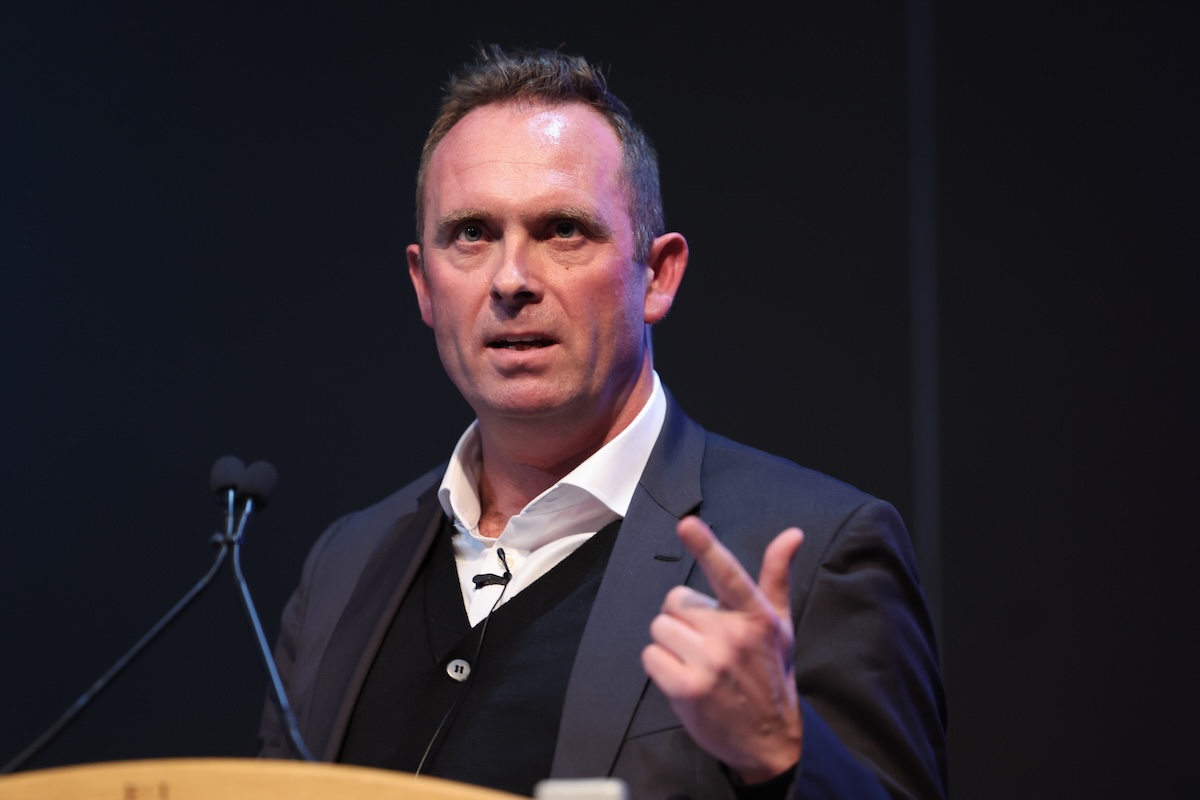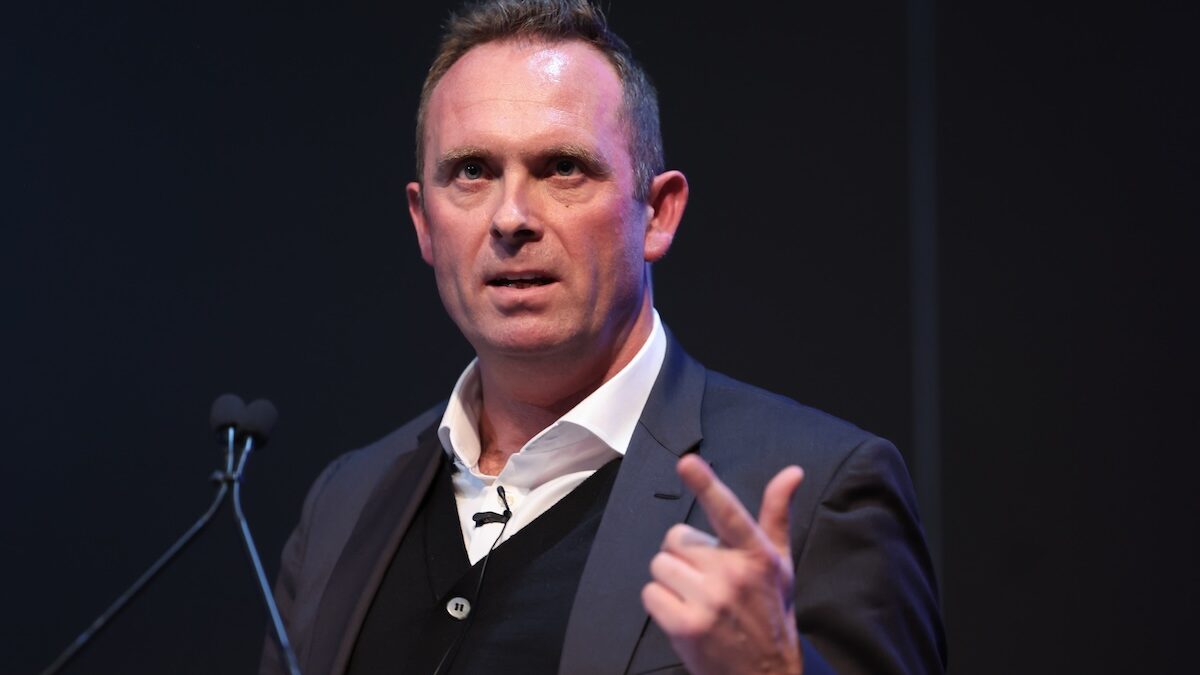

With two decades at the digital coalface, Paul McGinness, founder and chair of Edinburgh- headquartered consultancy Storm ID, has seen the technology landscape evolve and transform.
Since founding Storm ID in 2001, just after the first dotcom bubble burst, he has navigated the choppy waters of innovation, learning to distinguish the fleeting from lasting impact.
Although it has been considerably hyped, he believes artificial intelligence (AI) is less a passing wave than a rising tide with the power to lift society and the economy for the better.
He tells me: “AI is a paradigm shift. It is going to dominate business and society over the next 10 years, and beyond. Within five years, we could be on the cusp of artificial general intelligence (AGI), which means the technology will be able to outperform the most intelligent human being on most cognitive tasks.”
And the pace of change is rapid, with recent developments underscoring the growing confidence in the UK’s AI capabilities.
The sumptuous state visit of Donald Trump to the UK in September coincided with a flurry of high-profile technology announcements: Microsoft’s $30 billion investment in UK AI infrastructure, and CoreWeave’s £1.5bn investment in Glasgow-based green data centre specialist DataVita, equipped with the latest Nvidia chips.
The potential redevelopment of Ravenscraig, Scotland’s mothballed former steel mill, into a £3.9bn green data centre further adds to the sense that Britain could soon become an “AI superpower.” However, McGinness warns that focusing on hardware alone is a short-sighted strategy, as those assets quickly become obsolete.
He stresses that the smarter investment is in foundational capabilities – talent, computer infrastructure, and sovereign models – that deliver long-term impact for the economy and the public sector.
The evidence of AI’s economic promise is also building. The recent Epoch AI report, commissioned by Google DeepMind, estimated that doubling output in just 10% of remote, computerisable tasks could boost GDP by 1% to 2%, generating trillions of dollars in value, globally.
Scotland, with its abundant renewable energy and cooler climate, is well positioned to host the energy-intensive data infrastructure necessary for this transformation, leveraging wind and other green energy sources to power AI responsibly.
But the real promise lies not just in raw computing power, McGinness argues, but in how AI is integrated strategically into the economy and society, especially Scotland’s public services. Currently AI is deployed piecemeal largely aimed at personal productivity – a manager using ChatGPT to draft reports or summarise meetings.
While valuable, this is only the tip of the iceberg. The game-changer will be the deployment of “agentic AI”: systems that can operate across entire workflows, making decisions, prioritising tasks, and delivering automation at scale.
“In the public sector, there’s a perfect convergence of data, systems and processes to exploit this technology,” McGinness explains. “Underfunded services, backlogs, and complex assessment-based processes make AI particularly suited to reimagining how work is done.”
He highlights areas like housing, health and social care, planning, and revenues and benefits as ripe for AI augmentation. By embedding AI into existing systems, organisations can start to automate initial stages of complex tasks, freeing staff to focus on higher-value work and improving service delivery.
Scotland is starting to see this in practice. The AI Challenge, a competition in which Storm ID is a partner with Futurescot, has attracted high-quality applications from public sector bodies.
This year’s shortlist includes VisitScotland, for an AI-powered travel assistant; NHS Grampian, for a colorectal cancer referral tool; and Dumfries and Galloway Council, for AI-assisted triage and response in revenues and benefits.
“The quality of submissions has increased markedly,” McGinness says. “Organisations are beginning to understand what AI can realistically achieve and how to apply it strategically.”
Underlying this potential is the principle of “sovereign AI”— the ability to control how sensitive data is processed by keeping models close to the data. As a blueprint for this approach, McGinness points to the Nordic countries.
Instead of pushing sensitive information into public cloud servers, nations like Norway, Denmark, and Sweden are developing their own large language models specifically for public sector use, particularly in crucial areas like justice and law enforcement.
These initiatives, such as Sweden’s GPT-SW3 and the Danish Language Model Consortium, are run on secure, state-controlled infrastructure. By training models on their own languages and legal frameworks, these nations ensure that AI-driven tools for police intelligence, case law analysis, and legal research comply with strict GDPR and national data laws.
This sovereign approach allows them to harness the power of AI while maintaining the complete control and confidentiality over critical state data that avoids regulatory pitfalls. Storm ID’s recent work with DataVita and Hewlett Packard has produced a private AI solution that allows teams to work with sensitive data within secure, local environments.
“We can bring the models to the data rather than the other way around,” he explains. “This is essential for highly regulated sectors where data security is paramount like justice, police, health and parts of the public sector where governance issues arise.”
This approach has wider implications. By establishing AI infrastructure within Scotland, combining local data, skills, and renewable energy, the public sector can unlock large-scale transformation while maintaining compliance and trust, and still meeting net zero goals.
McGinness stresses, though, that this is about more than proof-of-concept projects or pilots, which have historically cluttered the public sector innovation landscape, not necessarily to the benefit of services.
“Decades of pilots have shown us what works technically,” he says. “What we need now is adoption and diffusion – scaling solutions that have evidence and can positively impact citizens, patients, and frontline staff, delivering improved health outcomes and operational efficiencies.”
In healthcare, for example, AI already shows promise in diagnostics. Aberdeen, Glasgow, and Edinburgh have developed AI-assisted imaging systems for stroke, cancer, and other conditions. These solutions could be scaled across a wider set of care pathways.
AI could also be used to improve chronic disease management, helping clinicians identify patients with rising risks earlier and support the delivery of guideline-aligned medical interventions before patients deteriorate and end up in overcrowded emergency departments.
Similarly, AI can enhance local government processes by automating assessments for planning consents, social care eligibility, and homelessness services.
“AI allows authorities to process service requests more efficiently and allocate resources where they are needed most,” McGinness adds. Such applications also highlight the importance of talent and skills.
Storm ID’s recent recruitment drive for graduate AI consultants and engineers revealed candidates highly adept at applying AI tools from day one. “These individuals can deliver value much earlier than previous generations,” he says. “They are native to these tools, and that accelerates adoption within organisations.”
Beyond technical expertise, McGinness stresses the need for new staff to be in possession of deeper sector knowledge, an understanding of business processes, and the ability to manage change – so AI can improve services rather than just automate individual tasks.
Storm ID collaborations with universities are helping develop new curriculum content, with one looking at how AI can be evaluated in a local government context. Internships are also preparing students for these roles, ensuring a pipeline of talent for both public and private sectors.
People and organisations also need a safe space to trial things and learn, McGinness says. This is especially so in the public sector, which is not renowned for its ability to tolerate mistakes, especially when it comes to heavily scrutinised taxpayer-funded, frontline services.
However, as a recent Audit Scotland report highlighted, council workers need to be equipped with digital skills including AI to meet the rising demand for services. “Necessity is the mother of invention,” says McGinness, noting the perfect storm of rising demand and resource constraints in the public sector.
He argues that many council services are built around assessments – for planning consents, social care eligibility, or benefits – which are ideal for AI augmentation.
“These are the kinds of areas where AI can really add value,” he explains. “You don’t need to rip everything out. You can build an intelligent layer into the process and start to automate parts of the journey, giving people time back to reduce the backlogs.”
This drive for efficiency is crucial given the Office for Budget Responsibility report on public finances from July, but for McGinness, the ultimate goal is to move beyond personal productivity gains and isolated pilots.
“GPT5 is already good enough to transform most industries, people just don’t realise it yet,” he concludes. “What we need now is adoption and diffusion – scaling use of AI to help improve productivity, reduce backlogs and positively impact services for citizens, patients and frontline staff.”
With the vote of confidence from US investors, the tracks for this transformation are clearly already being laid. And alongside this new wave of foreign direct investment, Scotland has its own AI strategy, a new digital strategy, and a thirst for technology and innovation to spearhead national economic renewal.
The policymakers are certainly on board – the only thing left is for the AI train to start pulling away from the station, before the opportunity slips away.