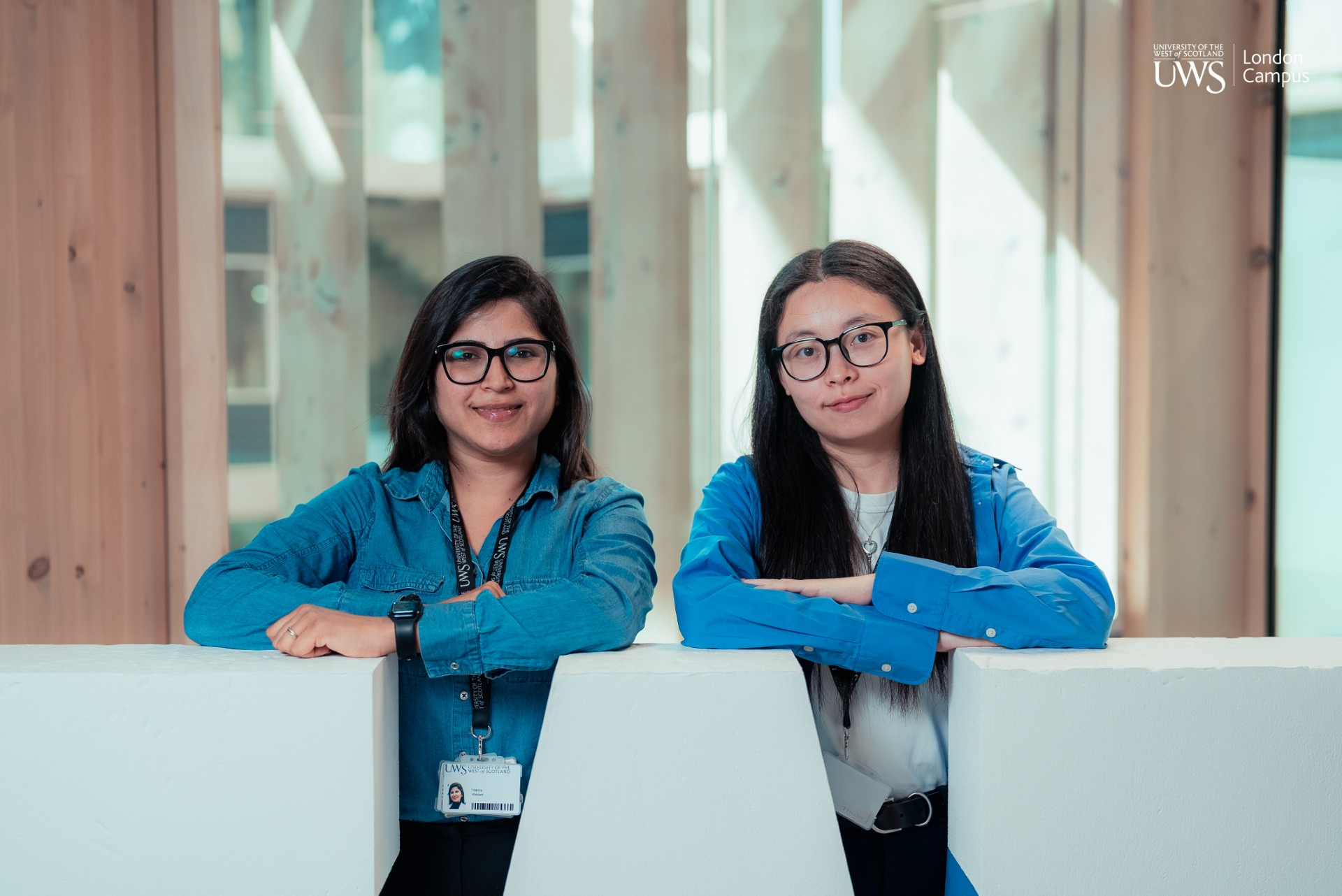
By Nancy Khialani and Chunxue Liu
The Challenge
Like many higher education institutions adapting to digital transformation, the University of the West of Scotland (UWS) has adopted a hybrid learning model to better serve a more flexible and connected student population. This approach improves accessibility while making more effective use of both in-person and online teaching, helping to boost engagement and responsiveness.
In doing so, it also exposed the limits of traditional paper-based tutorials, methods that no longer align with how students learn in a technology-enhanced environment. As digital technologies continue to shape how we teach, learn, and work, we saw a clear need to modernise our teaching practices and contribute more actively to the evolving tech ecosystem in higher education.
These challenges were particularly evident in our Level 7 Project in Practice module, delivered at the School of Computing, Engineering and Physical Sciences and designed for students pursuing project management. Many students were international students adjusting to a new academic environment, and they needed a structured, inclusive, and interactive learning environment. Academic staff, meanwhile, needed practical tools to support group work, track progress, and provide timely feedback without adding to their workload.
The Solution
To address these challenges, we adopted Microsoft OneNote as the core digital platform for the module. It brought collaboration, task management, and feedback into a single, accessible space. This allowed students to work on assignments, engage with peers, and receive tutor input in real time.
The module included scenario-based quizzes, case study analysis, and group presentations, all structured through a shared class notebook. Students collaborated in private workspaces and used shared pages for discussion and peer review, creating a balance between independent and group learning.
This method was based on pedagogical theory, such as the ADDIE instructional design framework, experiential learning theory, and Tuckman’s group development model. It made it possible for us to provide engaging learning opportunities while controlling cognitive load and guaranteeing accessibility.
From a teaching perspective, OneNote offered new levels of visibility into student progress. We could monitor group activity, provide timely feedback, and adapt teaching on the fly. This improved the quality of tutorials and supported a more collaborative learning environment.
In going paperless and embedding a scalable, cloud-based solution, we not only addressed immediate teaching needs, but also contributed to the broader shift toward a more innovative and tech-integrated model of higher education.
Evaluation
Feedback has been consistently positive. Students and staff highlighted better engagement, clearer visibility, and enhanced accountability.
Dr. Hazhar Faris, the MSc Project Management programme leader (London Campus), made the following observation:
“I found OneNote to be a valuable tool for enhancing student engagement. It encourages active participation during tutorials and provides lecturers with an effective way to evaluate student learning. Access to live data in the classroom has further improved the learning environment.”
Ms Sona Shadmand, the module leader for Project in Practice, emphasised the collaborative strength of the platform:
“It’s real-time collaboration features enable group-based problem-solving and brainstorming, which fosters peer-to-peer learning and deeper engagement. The platform also allows for personalised feedback within individual student sections, ensuring tailored support.”
Students, especially those new to UK education, found the platform accessible and user-friendly. Student comments reflected this:
“OneNote made organising notes effortless and allowed real-time collaboration. It kept me engaged and helped me manage classwork more easily.”
“It helped me stay organised and get immediate feedback. Lessons became more interactive and useful.”
Our experience shows that more than a digital notepad, OneNote enhanced learning outcomes, supported collaboration, and helped build a flexible, scalable model of education aligned with Scotland’s digital future.