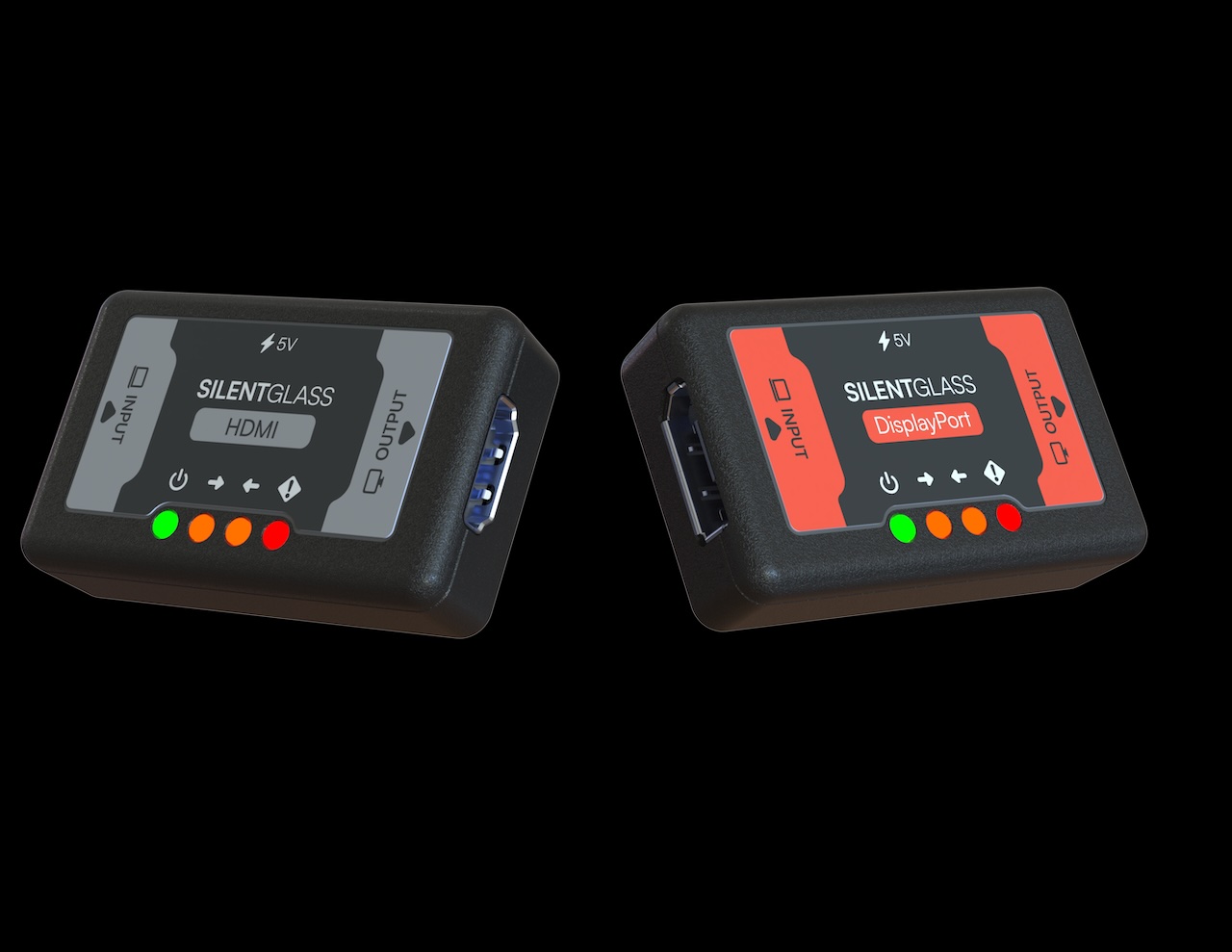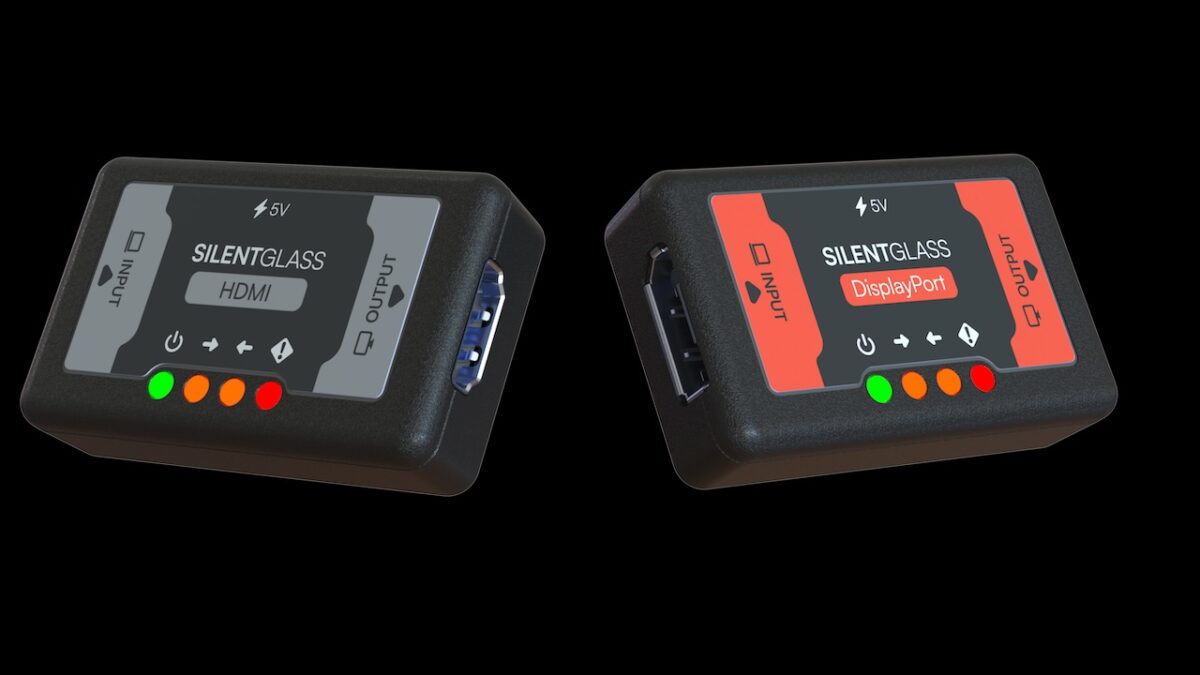

The National Cyber Security Centre (NCSC) has unveiled a new plug-in device to prevent hackers from infiltrating networks via the video connection to computer monitors.
HDMI and display ports which connect screens to desktops or laptops were found by open source research to contain vulnerabilities which could act as a means of network intrusion.
Technical staff at NCSC designed a solution that has resulted in ‘SilentGlass’ – a hardware device that can prevent anything other than video content being transmitted from computer to screen.
The new piece of kit, the first branded intellectual property developed by NCSC, was showcased for the first time today at CYBERUK, annual conference and exhibition for cybersecurity professionals, at the SEC in Glasgow.
Ollie Whitehouse, NCSC chief technology officer, said: “Display screens and monitors are everywhere in modern business environments, and the SilentGlass device will help protect previously vulnerable IT infrastructure with unprecedented ease.
“Its development and commercialisation shows the impact that the NCSC can have, alongside industry partners, with an affordable and effective product now globally available.”
He added: “By helping to launch a UK company onto the global market with this world-class innovation, we are breaking new ground and helping to strengthen national prosperity.”
Already successfully deployed on government estates, SilentGlass is now available for anyone to buy and use. It has been approved for use in the most high-threat environments.
Monitors can be a target for hackers as they can hold and process valuable, sensitive or personal data. They are highly likely to be used to gain access to a network for espionage purposes, disruption or financial gain, with mitigations often costly and inefficient.
Over the years, an increasing array of more sophisticated devices have become available, as more connections increases the risk of attack. SilentGlass has been developed to help protect against malicious connections and shut down this mode of attack.
NCSC, a part of GCHQ, created the intellectual property for the device, which is currently priced at £299. The UK company that has been licensed to manufacture and sell it globally, Goldilock Labs, took part in a joint briefing with NCSC colleagues at the SEC this afternoon. Officials confirmed that NCSC is entitled to a share of the profits generated by the sale of the device, which will be used in turn to fund further research and development (R&D) work.
Goldilock Labs, who were appointed following a competitive tender process, have partnered with Sony UK to distribute the devices globally.
Stephen Kines, co-founder, Goldilock Labs, said: “SilentGlass addresses a gap that has been widely overlooked. The hardware interfaces people rely on every day have rarely been treated as security boundaries, despite being exposed to risk through supply chains, third-party servicing, and direct physical access.
“Originating in NCSC-led work and brought into the commercial domain through its IP exploitation programme, SilentGlass turns high-assurance innovation into a practical, deployable security solution.”
He added: “What was once confined to national security environments is now being applied with a low-cost, easy to deploy solution for CNI and businesses where the same risks exist.
“SilentGlass is the first step in a wider effort to enforce behaviour at hardware interfaces before it reaches complex software. It reflects a shift toward treating physical connectivity as a point of control rather than an assumed trust boundary.”
SilentGlass was designed in Wolverhampton, and the manufacturing facility is at The Sony UK Technology Centre in South Wales, where the Raspberry Pi is made.
Officials declined to confirm whether there have been known instances where monitors have been used to mount network intrusions and said the device was based on open source research that pointed to potential vulnerabilities of HDMI and display ports.