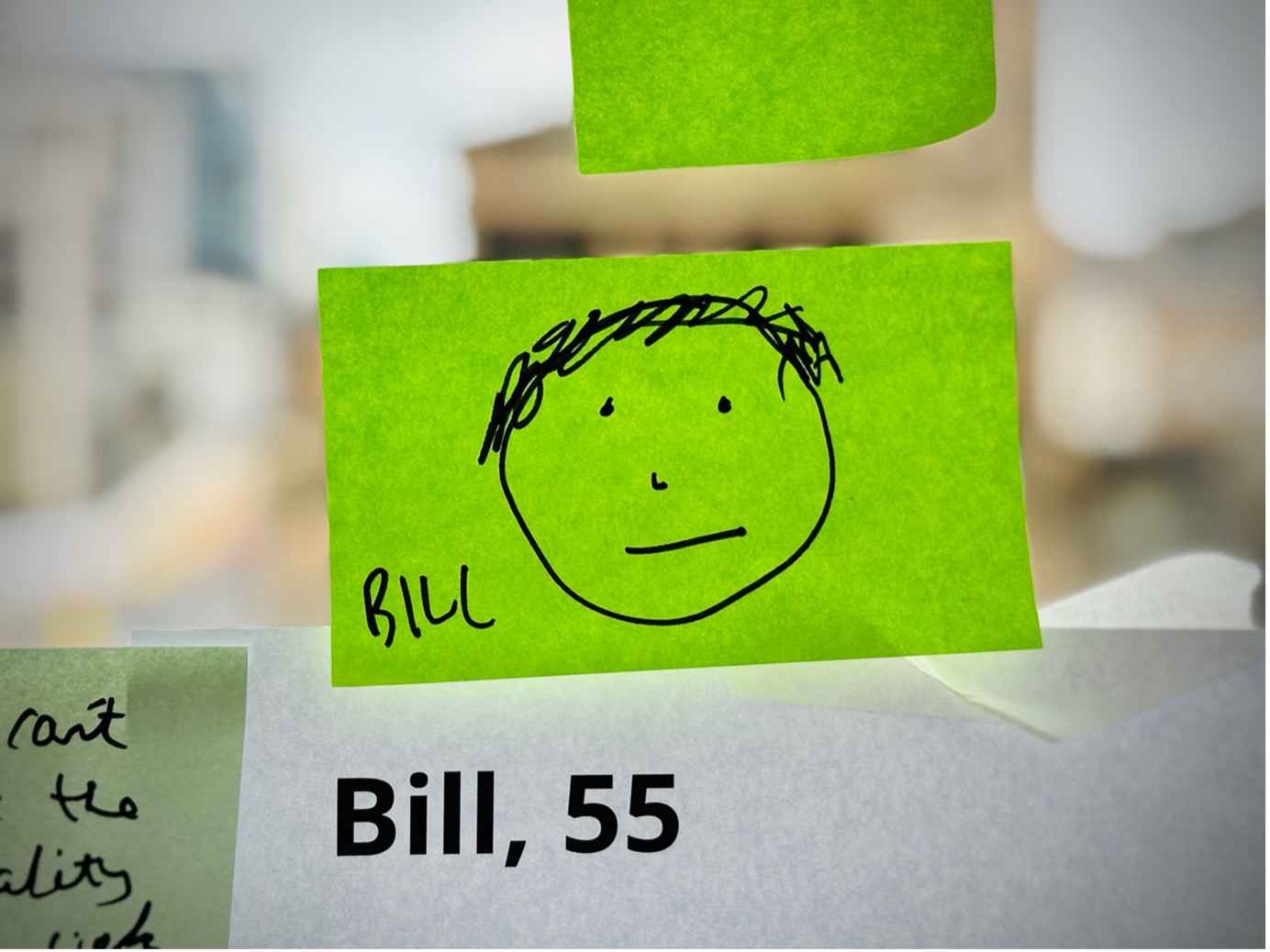
Do you know Bill?
He’s the guy who works at your local distribution centre to make sure your package turns up next-day delivery.
Bill is on a zero-hour contract, so his shifts can be cancelled at any time and they often are. His income is unpredictable, his stress levels are high, and he’s managing Type 2 diabetes and painful psoriasis.
He’s been referred to a specialist, but getting to appointments is tough. He can’t afford to miss work. He doesn’t work from home. He doesn’t choose his own hours. His mental and physical health are tangled up in a cycle that services weren’t designed to handle.
Bill shouldn’t have to choose between his health and a shift. But he does.
I’ve been thinking a lot about Bill and the countless people like him, people who keep the world moving but are often left behind by the very services that have been designed to serve them.
Scotland’s ambition is to do better for people like Bill. The vision for health and social care is one of services that are joined-up, accessible and genuinely built around the people who need them.
Programmes like the Digital Front Door, which aims to give every person in Scotland secure, straightforward access to their own health and social care information through MyCare.scot represent a significant step toward that vision.
The goal is not simply a to create a digital experience. It’s about bringing care closer to home, reducing the administrative burden on staff, and offering people genuine choice in how, when and where they access services.
But ambition alone is not enough. Transformation programmes often stumble when user needs are treated as an afterthought rather than a foundation.
When the requirements of the system take precedence over the needs of the person, the result is too often solutions that cause frustration and service gaps, which lead to poor outcomes for citizens and the organisations who create them.
Realising the potential of programmes like the Digital Front Door depends on something much more fundamentally human than technology.
It depends on listening. Genuinely, continuously, and with humility.
Getting this right means going further than consultation. It means walking alongside people, understanding their lives, their challenges and designing with them rather than for them.
From consultation to co-creation
There is a meaningful difference between gathering requirements and genuinely co-designing with the people who will use a service.
Traditional ‘waterfall’ delivery approaches tend to front-load consultation. There’s an initial attempt to capture all possible needs at the beginning of a project, then delivery teams retreat to focus on developing features and functions. By the time real users encounter the service, the window for meaningful influence has long since closed.
Co-creation is something more continuous and more demanding.
It asks teams to understand not only what users need from a transaction, but their clinical, practical and emotional needs — and to consider their entire experience, not just the specific interaction a service is designed to support.
That means engaging citizens, clinicians, care professionals, operational and policy stakeholders not once, but throughout the entire design and delivery journey.
In practice, this looks like focused discovery work, iterative design, and frequent testing with real users, including people who may face barriers to digital access.
A service that cannot be used by people with different physical, mental health, social, cultural or learning needs, or by those without internet access or digital confidence, is not a finished service. Designing for the assumed average user, or optimising only for the so-called happy path, is a failure of both ambition and inclusion.
Critically, teams need to work towards solving whole problems — not isolated transactions — and to provide joined-up experiences across every channel a user might need.
Co-creation, practised with that breadth of intent, builds solutions that genuinely meet user needs.
And in health and care, where the stakes are high and trust is hard-won, that matters more than almost anything else.
Embedding user-centred design in delivery
Embedding user-centred design as a genuine organisational practice — rather than a ‘project phase’ — requires deliberate focus across three key interconnected areas.
1. Build teams with multidisciplinary perspectives
The best digital health services are rarely built by any single discipline working alone.
Technical capability without human insight produces systems that work in theory but fail in practice. Human insight without technical grounding produces ambitions that cannot be delivered. The two must work together.
In practice, this means bringing together DDaT roles — researchers, service designers, developers and solution architects — alongside citizens, clinicians, change specialists, and where needed, legal, policy and clinical safety experts. Each brings a perspective the others cannot fully replicate, and it is precisely in the space between those perspectives that the most considered, effective solutions are found.
2. Use agile ways of working
Using agile, iterative ways of working enables teams to prototype early, learn quickly and refine in collaboration with users. Solutions supporting person-centred care benefit significantly from this approach, with feedback cycles shaping everything from content to navigation.
3. Balance innovation with governance
Health and care environments carry significant regulatory and security obligations. Navigating these without allowing compliance to become a barrier to usability requires close collaboration between technical, legal and design specialists from the beginning— not at the point of sign-off.
Frameworks like the Digital Scotland Service Standard provide an important foundation here, setting out clear criteria for how public services should be designed, built and continuously improved with users at the centre. It reenforces the point that user-centred design is not a stage in a project plan. It is a mindset that needs to be embedded throughout the entire team and service lifecycle.
Outcomes beyond the screen
The benefits of collaborative design extend well beyond improved usability.
When people are involved in shaping a service from the outset, they are more likely to trust it, adopt it and advocate for it.
Services built genuinely with users in mind consistently achieve higher adoption rates and require less costly rework and re-engagement down the line.
In health and care, where the consequences of low adoption are not merely inconvenient but can directly affect clinical outcomes. It’s fundamental to whether a programme succeeds or fails.
Operationally, the gains are equally significant. When workflows are designed around the reality of how people actually work — rather than how a system assumes they do — inefficiencies surface earlier, processes become leaner, and staff spend less time navigating around tools that were never quite right for the job. The result is services that are not only easier to use, but cheaper to run and more sustainable over time.
Perhaps most importantly, are the equity outcomes and nowhere is this more significant than in addressing what is increasingly referred to as “missingness.”
This term describes people who are effectively invisible to public services: individuals who do not appear in datasets, do not engage with formal systems, and whose needs consequently go unrecognised and unmet.
Like Bill.
They may be experiencing homelessness, social isolation, poverty, or profound distrust of institutions. They are not hard to reach because they are indifferent. They are absent from the picture because the systems we design rarely go looking for them.
User-centred design, practised with care, directly challenges this.
When discovery research is designed to seek out those who are not already engaged — through community-based outreach, trusted intermediaries, and non-digital touchpoints — services begin to surface needs that would otherwise remain hidden.
Designing for missingness means asking not only “how do we improve this service for existing users?” but “who is not using this service, and why?” That shift in question can fundamentally change what gets built, and for whom.
Designing with diverse communities across Scotland — including those with lower levels of digital confidence, disabilities, limited connectivity, or complex and chaotic lives — produces services that are more resilient and more sustainable.
When the Digital Scotland Service Standard calls for inclusive design, it is recognising that exclusion is not only a moral failure but a practical one.
When services are designed with people, they serve more people, more effectively.
Lessons learned: What collaboration really needs
When delivering complex digital health and care programmes, the same patterns emerge time and again.
The discovery phase gets cut when timelines tighten. The partnership fractures when research findings are inconvenient. The well-intentioned platform is delivered on time, but people find it difficult to use.
And when things go wrong, the instinct is too often to look for someone to blame rather than something to fix together.
These are not random failures. They are predictable ones, and they are preventable. But only when the organisations involved are genuinely committed to shared ownership of both the process and the outcome.
As a long-term partner in digital health and care transformation, we have seen what separates the programmes that endure from those that stall. It is rarely about the technology. It is almost always about the relationships, the culture and the leadership that surrounds it.
Four insights in particular stand out. Lessons that apply equally whether you are working within the public sector or alongside it, and that we believe are essential to anyone serious about delivering change that lasts.
- Leadership commitment is essential
Without visible, sustained support from senior stakeholders, user-centred practice is squeezed out by the pressure to deliver.
- Time invested in discovery pays dividends in delivery
The temptation to move quickly to ‘build’ is understandable, particularly in an age of AI. But the upfront cost of really understanding the problem is far smaller than the downstream cost of solving the wrong one.
- Transparency strengthens partnerships
Sharing findings openly, including uncomfortable ones, builds the credibility that long-term collaboration depends upon.
- Culture change is as important as technology change
Technology enables, but it’s the culture which determines whether that capability is ever truly realised. The shift toward genuinely listening to users, including those who have never previously had a voice in how services are shaped, requires sustained investment in people, practices and values.
Co-Designing the future of health and care
Collaboration is not optional in modern public service reform. It’s the condition under which reform actually works.
Scotland’s transformation agenda cannot be delivered by any single organisation working in isolation. The Digital Front Door programme demonstrates what genuine shared ownership looks like in practice — giving people secure access to their own health and social care information, rolling out incrementally, and remaining grounded in real user needs at every stage. It is a standard worth holding ourselves to across everything we build.
But as we talk about programmes and principles, we should keep Bill in mind. Not as a persona in a workshop or a user story on a backlog — but as a real person, navigating a real life that doesn’t pause for missed appointments or systems that weren’t designed with him in mind. He is not an ‘edge case’.He is the reason this work matters.
Scotland has the ambition, the programmes and the people to get this right. The opportunity before us is to build a health and care system that works for everyone. One where nobody has to choose between their health and their livelihood.
That is the future worth designing for. And it begins with collaboration, with listening, and with the courage to put people genuinely at the heart of everything we build.