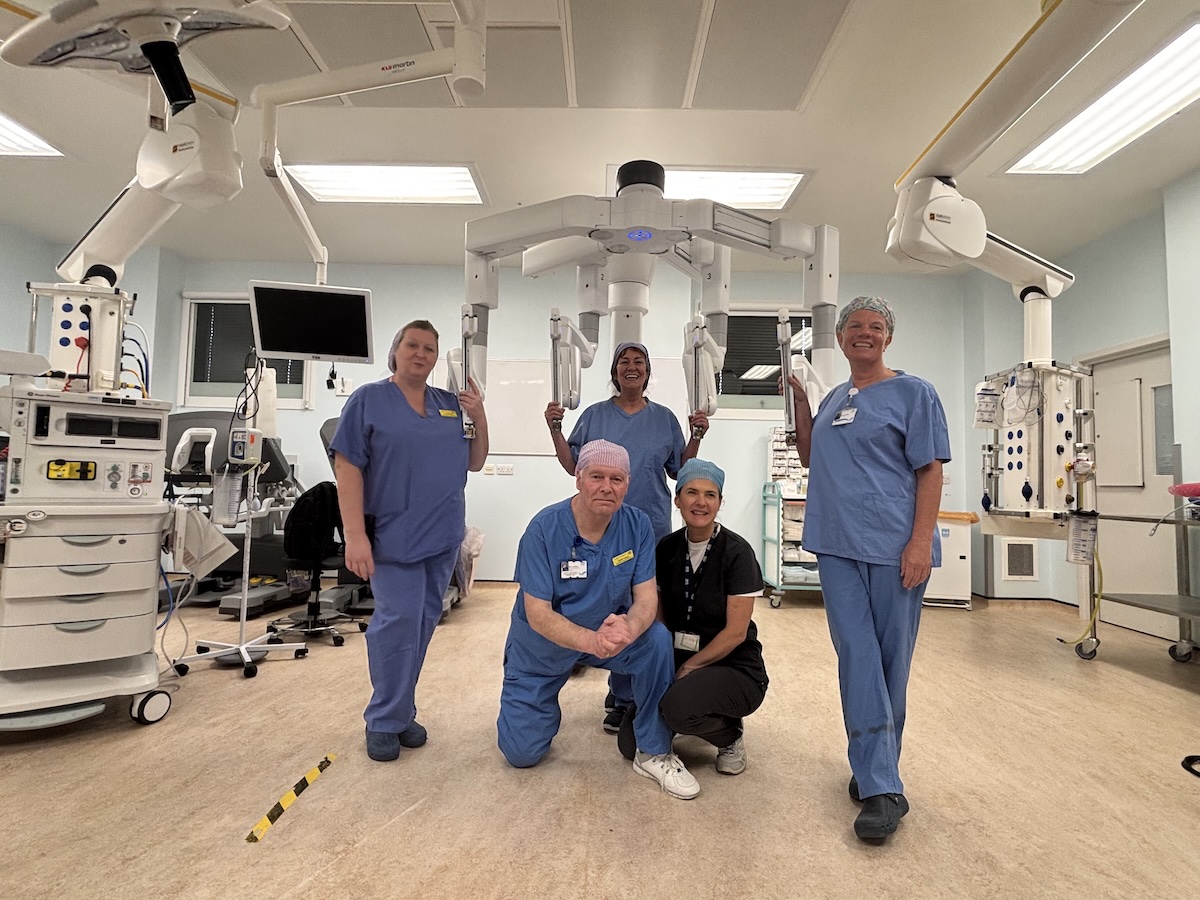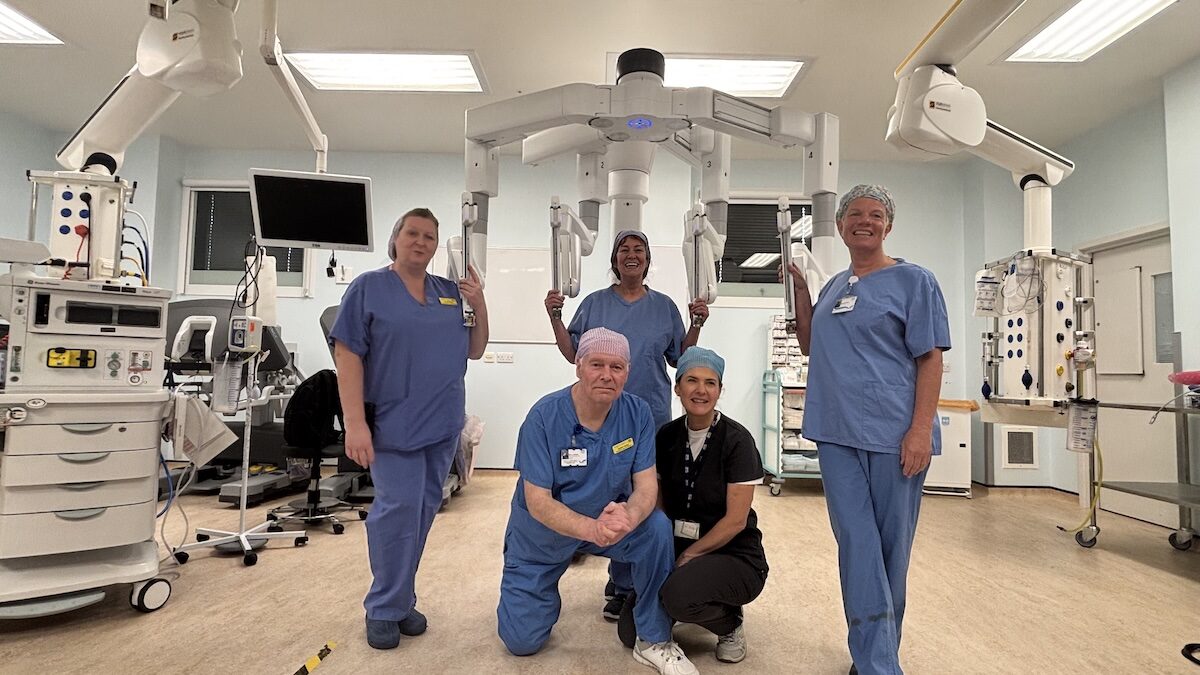

Surgeons in Glasgow will be able to treat more people using robotics thanks to a large donation by a patient who underwent colorectal cancer surgery.
The anonymous patient donated £800,000 to help NHS Greater Glasgow purchase a new dual console da Vinci Xi surgical system for use at the Queen Elizabeth University Hospital (QEUH).
The addition of the ‘minimally invasive’ system will create two extra theatre days per week for colorectal cancer surgery at QEUH, doubling the hospital’s current capacity.
An additional £400,000 was contributed directly by Beatson Cancer Charity, with NHSGGC funding the remainder.
As part of the expansion, one of the existing robotic-assisted surgical systems at QEUH will transfer to the Royal Alexandra Hospital (RAH) – the first time a surgical robot has been in use at the Paisley site.
It will bring care closer to home for people living in Renfrewshire, Inverclyde and West Dunbartonshire, reducing the need for travel and supporting continued development of local multi‑specialty robotic-assisted surgery programmes in colorectal, gynaecology and urology.
Dr Natalie Peel, consultant surgeon at the QEUH, said: “Expanding our robotic‑assisted surgery service at the QEUH is a huge step forward for patients.
“The additional theatre capacity means we can offer minimally invasive colorectal cancer surgery to more people, more quickly, and with the improved recovery and outcomes this technology delivers.
“We are enormously grateful for the generosity of our patient and the Beatson Cancer Charity that has paved the way for this advancement in patient care.”
Professor Susan Moug, consultant surgeon at the RAH, said: “Having a robotic-assisted surgical system at the RAH for the first time is transformational for patients in Renfrewshire and Inverclyde.
“It will allow us to provide state‑of‑the‑art care closer to home, reduce travel for patients and staff, and build a sustainable multi‑specialty robotic programme for the future.”
She added: “We are deeply thankful for the remarkable generosity that has made this possible.”
Robotic‑assisted surgery (RAS) offers patients quicker recovery, reduced pain, fewer complications and shorter hospital stays. The technology enables surgeons to carry out complex operations through tiny incisions, allowing enhanced precision and visibility.
Nationally, more than 10,000 patients in Scotland have benefited from da Vinci RAS since 2021, following significant expansion of these systems across the NHS. Within NHSGGC, da Vinci systems are already in place at the Glasgow Royal Infirmary and QEUH, supporting major specialist programmes in colorectal, gynaecology, urology, and head and neck surgery.
The programmes have contributed to reduced rates of open surgery and improved access for patients.
The newly-acquired surgical robot will strengthen this progress further, doubling colorectal RAS capacity at QEUH and allowing RAH to establish its first permanent robotic service.