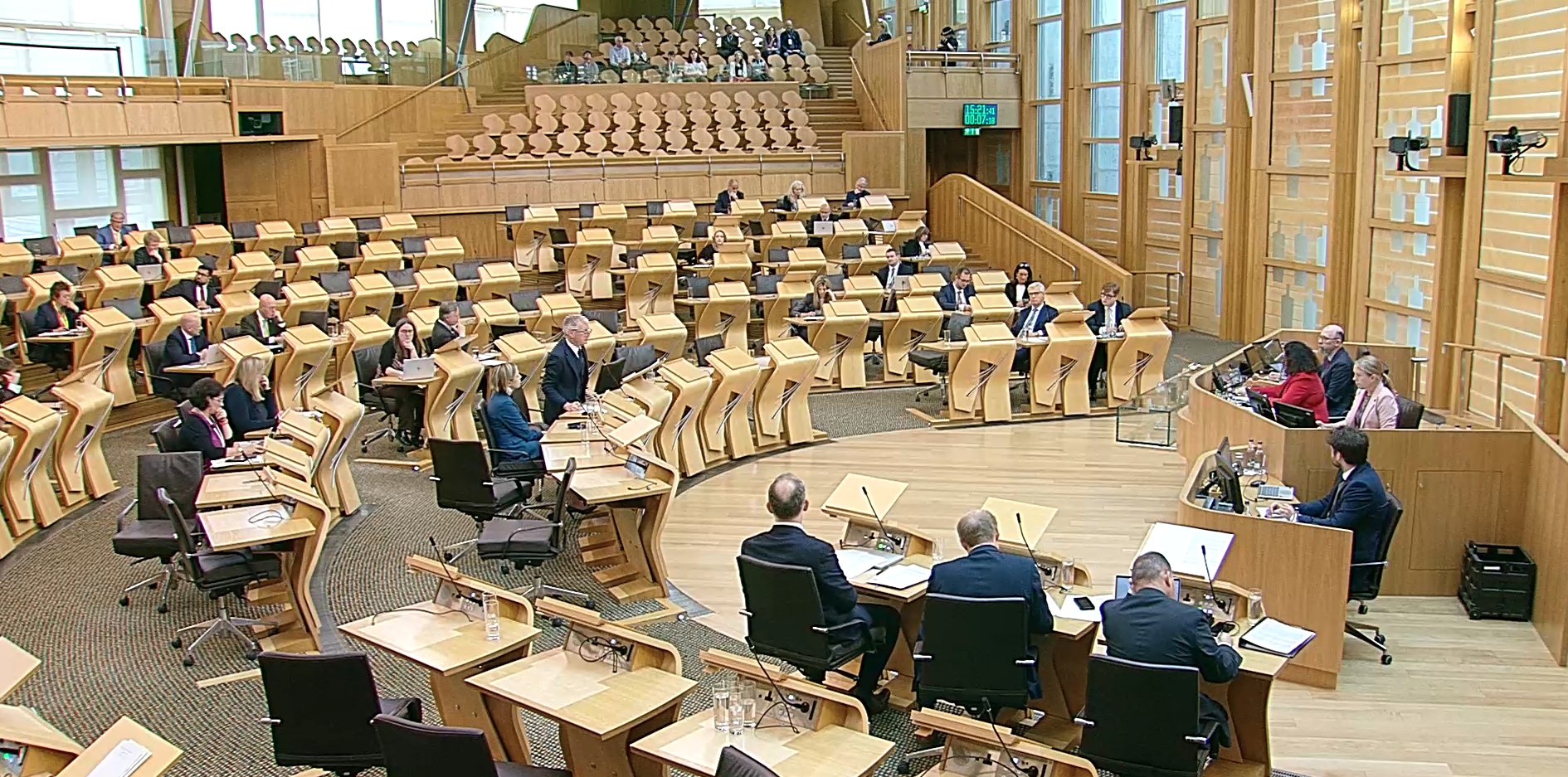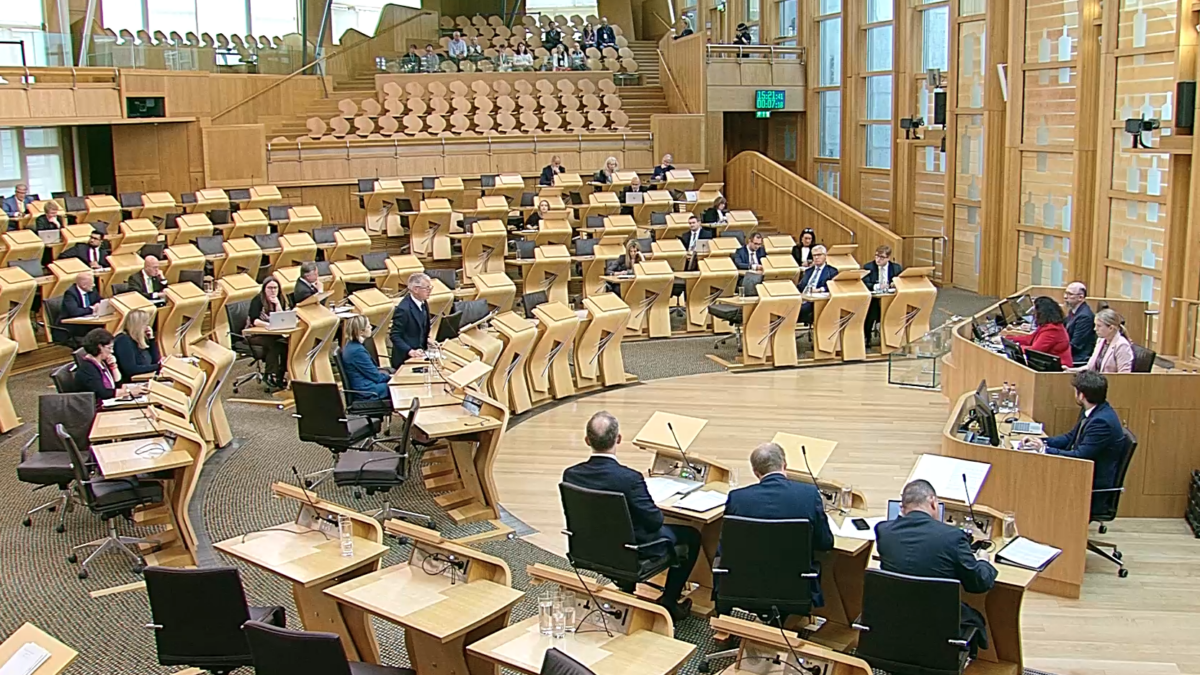

A public service reform motion was passed at Holyrood yesterday as the new cabinet secretary charged with ‘rewiring’ the sector pledged concrete proposals would be coming ‘soon’.
MSPs debated the future of public services at the Scottish Parliament with a range of concerns highlighted – including protecting frontline services to removing ‘duplication’ of effort among government agencies.
The role of technology – and AI – was raised as a potential enabler of more efficient and streamlined public services, with a pledge to prioritise sustainability over ‘existing corporate structures’.
Ivan McKee, the recently-appointed cabinet secretary for public service reform, said: “I’m delighted to open this debate this afternoon on public service reform, which I believe will be the defining task of this parliament.
“Public service reform is about delivering our vision of a Scotland where citizens enjoy excellent public services delivered to meet their individual needs, and where staff providing those services feel valued and empowered, empowered to make a difference to people’s lives.”
However, Mr McKee acknowledged that the kind of public services envisioned by the Christie Commission in 2011, which focused on greater integration of services and prevention – had yet to be delivered.
The Scottish Government set out its public service reform strategy last year, where digital and data sharing were highlighted in two out of its three pillars – on ‘joined up’ and ‘efficient’ services. The strategy has 18 workstreams including leadership and cultural change, ensuring the right delivery landscape, simplification and data sharing and data usage.
However, during yesterday’s debate some politicians focused less on the technology questions central to the reform and more on safeguarding jobs, amid fears that the new administration will embark on a series of swingeing cuts.
Others demanded an effective bonfire of the quangos, with calls for 132 public bodies to be scrapped, saving £6 billion, and ‘chopping middle-management bureaucrats’ in favour of frontline staff such as nurses.
Mr McKee, though, opened the debate with a focus on the Scottish Government is already saving the public purse through better procurement, closing 13 buildings no longer in use by government, and automating 140 services.
He said: “We have already shown what is possible. More than £300 million has been saved through more efficient procurement in the past two years and we are projecting savings of more than £50 million through the rationalisation of estates -13 core Scottish Government buildings have been closed in the past three years and there are more to follow. There is an extensive automation programme, with more than 140 automations having been implemented, delivering more than £15 million in cost avoidance.”
However, he added: “Despite the progress that we have made, we recognise that we have not delivered the scale and pace of reform that is required. The public service reform strategy identified the systemic barriers that we face: siloed organisations, budgeting that supports structures but that is not always aligned to services and a culture that can be slow to change.”
In that sense, he appeared open to a reduction in bureaucracy following a review process, but only where unnecessary waste and duplication was found.
He said: “Organisations that are excessively hierarchical, with multiple layers of management, and stifling to innovation, need to change. We will work closely with our trade union partners to deliver that change.”
He said: “No one who uses or works in public services would say that they are as streamlined or seamless as they should be. Everyone can identify waste in the system. That is why efficiency is a core part of public service reform -tackling duplication; sharing services across organisations; making better use of data, digital tools and our public estate; and being honest about where we can improve.”
Scottish Labour’s Michael Marra was more explicit, and called for a “timetable for the reduction in … public bodies”.
He said: “After five years, I still trip over new ones every week, and I have no idea what they actually do.”
He also agreed with the technology-enabled vision of the strategy.
“The cabinet secretary knows that I fundamentally believe in the empowerment of citizens,” he said. “I have told him that my vision of a future Scottish state is very much one in which citizens are empowered, where they own and have control of their data and understand what is happening. However, that requires a broader vision of technological implementation, which I find lacking in the strategy.”
Reform leader Malcolm Offord said the technology aspects of the reform programme should not be considered ‘revolutionary’, and that artificial intelligence and digital improvement should be considered the ‘ordinary course of business’.
He blamed much of government waste and inefficiency on unelected and unaccountable arms-lengths bodies that leave ministers without effective control or oversight of decision-making.
He said: “I encourage the cabinet secretary to start looking immediately at where we are wasting money, where there is duplication of money and where we are not getting value for money.”
The SNP’s Zen Ghani pointed to the need to embrace new technology as part of the reform process.
He said: “Every month, across the world, new technologies and innovative ideas come into force, and if we are to ensure that our various public bodies can meet the needs of the future, it is vital that we embrace such reform as a united Parliament.
“Technologies such as artificial intelligence have the potential to reduce administrative burdens, to support our workforce and to improve the delivery of public services. Using AI effectively will help us to ensure that public services are more responsive, efficient and accessible for the people we serve.”
Concluding the debate, Mr McKee pledged to add further detail on the exact nature of public service reform soon.
He said: “The real test of that will come when we bring forward concrete proposals, which everyone is calling for us to do. That will happen sooner rather than later, right across the public sector landscape and in our support for the third sector. We will refer back to this debate and what members have said in due course, when we come to the nitty-gritty of taking proposals forward, but I would like to think that the proposals will be approached in a constructive manner and that there will not be opposition-ism [sic] for opportunistic reasons.”