At The Data Lab, we know the challenge of AI is about more than technology. It is about people and essential skills.
We first created a framework for data skills in 2020, after researching the data skills gap with employers in Edinburgh and south-east Scotland. Delivered through our Data Skills for Work programme, it helped individuals, employers, and training providers make sense of the growing number of data-related training options.
It wasn’t about turning everyone into data scientists. It was about helping people navigate a confusing and scattered skills landscape—especially those facing barriers to upskilling, like insecure jobs, low pay, or the risk of redundancy due to automation.
Since then, the pace of change has only accelerated. The pandemic drove digital and hybrid working. Brexit disrupted the talent pipeline. And now, generative AI is rapidly changing how we work.
In response, we repeated our research—this time at a national scale—to understand how Scotland’s data and AI skills needs have evolved. Our new framework builds on those findings.
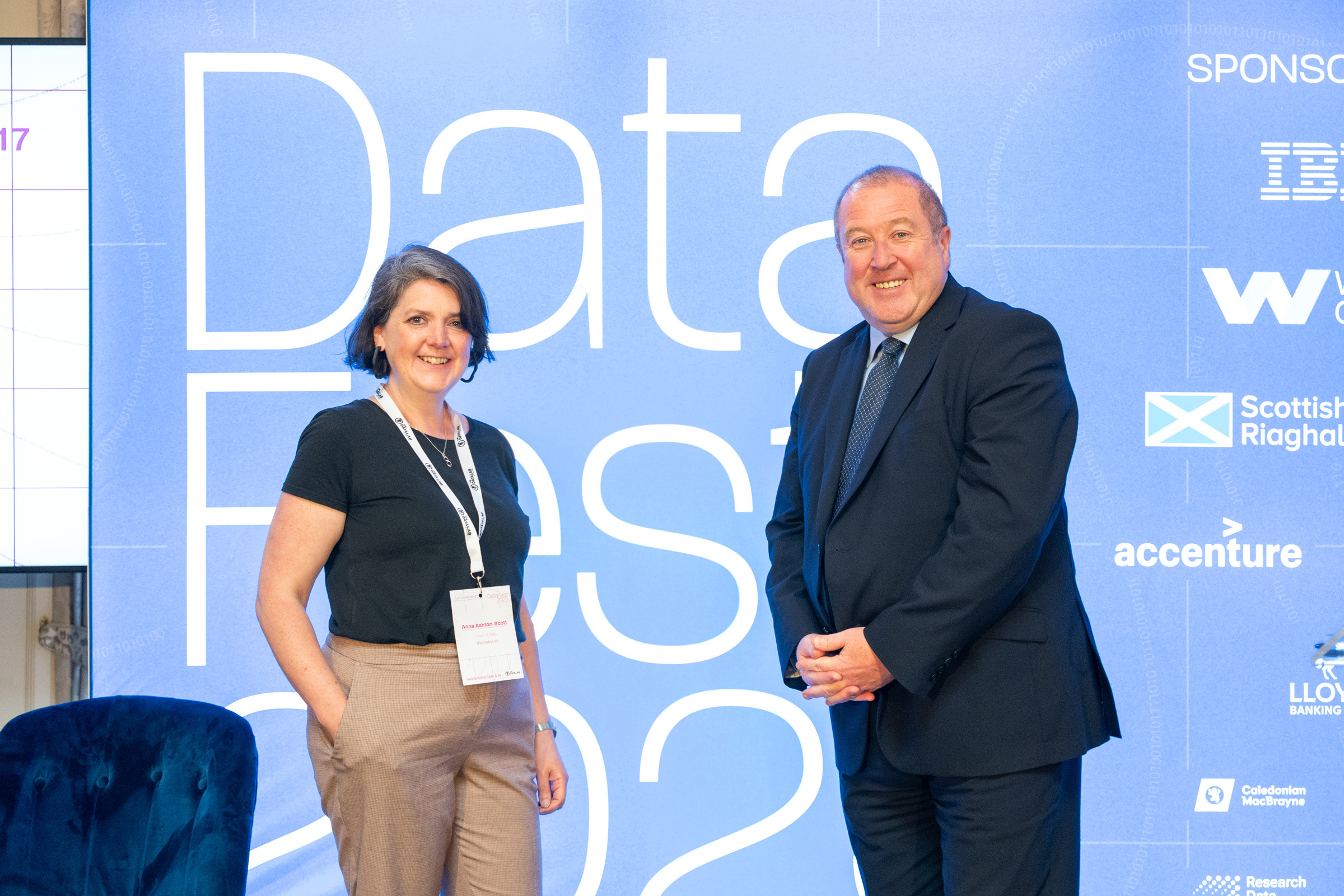
In May 2025, our annual DataFest brought together Scotland’s diverse community of innovators, educators, public servants, students, and everyone in between, to discuss how we are all collectively trying to navigate AI.
At a packed pre-conference event focused on skills – which is one of the biggest barriers to using AI effectively in organisations – the conversation and shared concerns proved that our newly launched Framework could not be timelier, or more necessary.
What the Framework delivers
Much of the original data skills gap still exists. But now, AI literacy—the ability to understand, use, and critically engage with AI tools—is becoming essential in all sectors. Here’s what our latest research found:
- Most business leaders rate their organisation’s data and AI literacy as moderate to low.
- Many public and private sector organisations cite lack of time, resources, or funding as the main barriers to upskilling.
- A shortage of skilled people, limited budgets, and weak infrastructure are holding back data and AI adoption.
- The most pressing skills gaps relate to applying AI concepts, understanding machine learning, and using AI in sector-specific ways.
- Over half of educators say courses are still focused on basic or intermediate levels—highlighting the need for more advanced training.
To help with this, we’ve created a clear way to identify the data and AI skills people need, based on their relationship to these technologies in a work context. The framework uses personas, competency areas, and specific skills to make it easier for individuals and organisations to see a clear path to build their skills.
One of the most common challenges we hear is simply not knowing where to start. Many people feel unsure about their own digital skills—or what their team needs to succeed. Whether you’re a Data & AI Citizen, Worker, Professional or Leader, we hope this framework helps you take that first step with confidence.
Take the First Step: Explore the Framework
You can explore the full Data & AI Skills Framework—including personas, skills breakdowns, and learning pathways—on our website. Download the framework here: https://thedatalab.com/professional-development/skills-framework/
Take the Second Step: Explore the Whitepaper
We’ve also published a whitepaper, “Data and AI Skills in Scotland: Closing the Gap for a Promising Economic Future.”
It explores the barriers and opportunities shaping Scotland’s data and AI workforce, with evidence-based recommendations for funders and policymakers. Download the white paper here: https://thedatalab.com/professional-development/skills-framework/
If you are interested in exploring how The Data Lab can support your organisation, get in touch with us https://thedatalab.com/contact-us/